


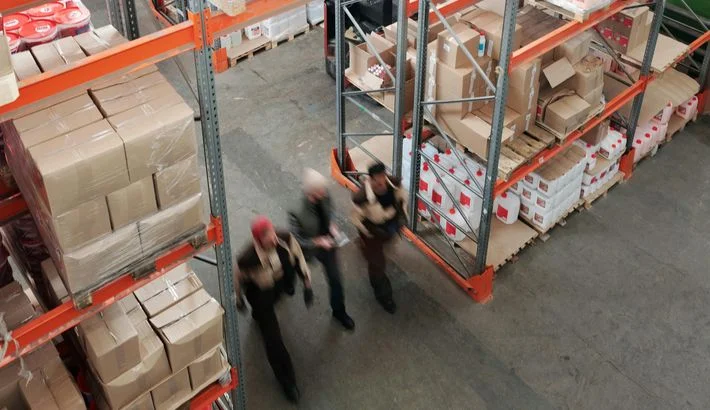
What is a 3PL and How Can It Benefit Your Business?


 To share
When you ship an order to a customer or receive goods from a partner, you rarely think of logistics as a system. For the sender and recipient, it's always a specific outcome. The package must arrive quickly, without surprises, and at a clear price. In e-commerce, this experience becomes part of the brand, even if the seller isn't directly involved in the delivery.
As e-commerce grows, many companies are wondering how to simplify processes without losing control. This is where interest in third-party logistics solutions that handle routine and complex tasks arises. To understand how this works, you should first understand the basic concepts and role of 3PLs in the supply chain.
For businesses that ship orders from the US or receive goods for onward delivery, understanding the logic of third-party logistics helps them make more informed decisions. This is especially true for international shipping, as any error incurs time and cost.
What is a 3PL (Third-Party Logistics)?
Many people are interested in the answer to the following question: "What is 3PL?" People often use this term when discussing warehouses, delivery, and fulfillment. However, in practice, it means much more.
In the 3PL model, a company outsources some or all of its logistics processes to an external partner. This approach allows the shipper to focus on the product and customers. It reduces the time and effort required to manage warehouses and shipments.
Simply put, 3PL is outsourced supply chain operations, in which a third-party provider is responsible for warehousing, inventory management, order processing, and delivery. From the customer’s perspective, this means stable delivery times, clear tracking, and predictable service. For the shipper, this translates into a lighter operational load and greater efficiency.
In e-commerce, 3PL is essential because orders can arrive from multiple channels simultaneously. Flexibility and precise coordination are required for online stores, marketplaces, direct-to-consumer (DTC) sales, and B2B fulfillment. Third-Party Logistics manages the connection between ordering, fulfillment, and distribution. It becomes part of the supply chain.
To better understand the role of a 3PL, you need to imagine the tasks it covers in the daily work of the shipper and receiver. This typically includes the following elements of the supply chain:
- receiving and storing goods;
- inventory tracking;
- processing incoming orders;
- pick and pack operations;
- working with shipping carriers;
- organizing last-mile delivery.
Each of these aspects directly impacts customer satisfaction. When logistics operates transparently, the recipient sees results in the form of precise deadlines and accurate delivery. The shipper, meanwhile, gains control through digital tools such as a Warehouse Management System (WMS) and ERP integration.
For companies operating in international markets, 3PL services are a key element of scalability. This format helps integrate international shipping, freight forwarding, and local delivery into a single system. This is why operators like Meest are crucial for businesses that ship orders from the US to dozens of countries worldwide.
The Core Services of a 3PL: A Look Inside the Fulfillment Center
For senders and recipients, 3PLs often remain behind the scenes. However, this is where everything crucial happens. Every order passes through a fulfillment center, where speed and accuracy determine the final delivery experience. Understanding what happens inside helps better appreciate the value of third-party supply chain operations.
The 3PL meaning is difficult to overestimate, particularly for businesses that want to simplify logistics without losing control over their operations. After all, they connect the product, the order, and the final recipient. These processes encompass not only storage but also shipment preparation, inventory management, and returns processing. For e-commerce, this is the foundation of stable operations, especially as volumes increase.
Within a 3PL, logistics operates as a single integrated system, with each stage dependent on the others. Typically, key processes look like this:
- receiving goods into the warehouse;
- storing and placing inventory;
- accounting for inventory;
- collecting customer orders;
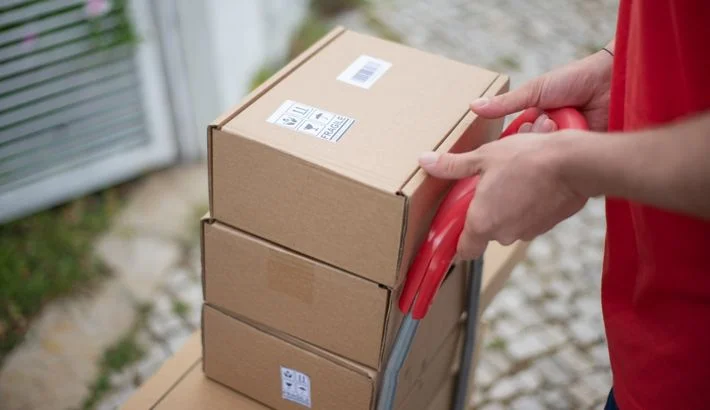
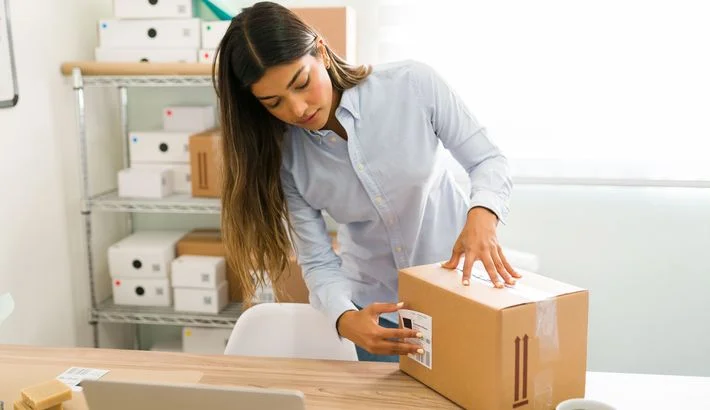
- packaging and labeling parcels;
- delivery.
These operations tie closely to warehousing and inventory management. Modern 3PLs use a Warehouse Management System (WMS) to ensure shippers always have up-to-date inventory and order status. For the recipient, this means fewer errors and more accurate delivery times.
Additional services deserve special attention. They often go unnoticed but significantly improve convenience. These include kitting and assembly, pick and pack for various sales channels, and returns management (reverse logistics). All this reduces the burden on the shipper's core business functions.
When supply chain operations function as a single mechanism, both parties benefit. The sender gains control and flexibility, and the recipient receives reliable, uninterrupted service. This is how the fulfillment center becomes not just a warehouse but a fully-fledged delivery management center.
The Top 5 Benefits of Partnering with a 3PL
When order volumes begin to grow, logistics ceases to be simply a delivery stage. For the sender, it becomes a complex system with dozens of processes that require daily monitoring. For the recipient, this always means a specific expectation — delivering the order on time, without errors or unnecessary questions. Any failure along the way directly impacts trust and repeat orders.
This is why partnering with a 3PL is increasingly viewed as a strategic solution. The warehouse manages the logistics portion of the supply chain, integrating it into a unified, predictable system. Warehouse storage and fulfillment are transparent and manageable. So is the handover to the courier. Every stage is the same.
This is especially important in e-commerce. Customer experience is shaped not only by the product but also by how quickly, accurately, and clearly it is delivered. The key benefits of partnering with a 3PL are as follows:
- reclaim time for business;
- reduce shipping operational costs;
- leverage expertise and technology;
- scalability on demand;
- improve customer satisfaction.
Each point on this list represents a distinct way 3PLs impact supply chain operations and the business overall. These benefits work together, reinforcing each other and creating a sustainable growth model.
Reclaim Your Time to Focus on Your Core Business
For shippers, logistics often becomes the most resource-intensive area of the business. Monitoring warehouses, packaging, domestic shipping, returns, and communicating with carriers requires constant attention. Over time, this pushes key decisions to the back burner. Product and marketing development thus become secondary.
When a business outsources these tasks to a 3PL, its focus shifts. Fulfillment, warehousing, and distribution cease to be a daily routine. All operational processes are handled by an external team, with logistics as the primary responsibility. This frees up time and resources for strategic tasks.
In practice, the shipper can focus on what truly drives growth:
- product line development;
- customer experience management;
- launching marketing campaigns;
- sales and demand analysis;
- entering new markets.
This approach directly impacts the recipient. When the shipper isn't overwhelmed by operational issues, they respond to requests more quickly, update their product range more promptly, and focus more on customer service. Customers feel confident and stable in every interaction with the brand.
As a result, logistics no longer distract from the core business. The shipper manages the business, not the delivery processes. The other party receives a higher-quality and more predictable experience at every stage of the ordering process.
Reduce Shipping and Operational Costs
Keeping logistics processes in-house is rarely truly cost-effective. As a business grows, expenses for warehouse rentals, personnel, packaging materials, and transportation coordination increase. For shippers, this quickly translates into constant margin pressure and complicates scaling, especially when operating across multiple markets.
3PL fulfillment services provide a systemic view of costs rather than individual item costs. A logistics partner uses scale and automation to lower costs at every step. Shipping in bulk and working with different carriers keeps costs low over time.
In practice, a combination of factors works together to reduce costs. These include:
- consolidation of warehouse operations;
- optimization of packaging processes;
- flexible choice of carriers;
- reduction in personnel costs;
- effective inventory management./li>
The shipper's savings extend beyond the shipping cost for the recipient. More optimized logistics means transparent terms, clear rates, and no hidden fees. This is particularly crucial for international orders. Shipping costs frequently determine whether a purchase is made.
This works out well for everyone. Shippers get predictable costs and can grow without costs jumping overnight. The customer receives affordable delivery and knows the price reflects the actual service, not logistics errors.
Leverage Expertise and Technology
Modern supply chain operations have moved beyond the physical movement of goods. Without technology, it's impossible to ensure the stability, transparency, and speed that shippers and recipients expect. This is why 3PLs rely on digital tools and accumulated expertise. They don't rely on manual process management.
With a WMS (Warehouse Management System) and automated pick and pack, shippers can see what’s happening in real time. Orders, inventory, and movement are easy to track. This reduces the need for constant manual monitoring and accelerates decision-making.
Linking logistics with sales through ERP integration helps create a unified data flow. Orders, inventory, and fulfillment operate as a single system, rather than as disparate elements. As a result, teams make fewer mistakes, process orders faster, and boost operational efficiency without adding more work.
The key technological advantages of 3PLs typically manifest themselves in the following aspects:
- automation of warehouse operations;
- accurate inventory control;
- synchronization of orders and deliveries;
- reducing the human factor;
- real-time process control.
For the end customer, technology translates into concrete and understandable results. These include accurate tracking, timely notifications, and predictable delivery times. When the system operates reliably, delivery ceases to be a source of anxiety and becomes a natural part of the service.
As a result, both parties win. The sender gains control of the process and confidence in it. The recipient, meanwhile, receives a more reliable and transparent brand experience. Technology has the power to transform logistics, making it a competitive advantage.
Scalability on Demand
Business growth is rarely uniform. Sudden peaks in demand are driven by holidays, seasonal sales, marketing campaigns, and market entry. This quickly becomes a real challenge for shippers, especially when their supply chain operations systems cannot handle sudden spikes in orders and shipment volumes.
It is at moments like these that many begin to truly understand what a 3PL warehouse is in practice. It's not just a place to store products — it's a flexible logistics hub. A 3PL provides scalability without requiring infrastructure expansion or urgent hiring.
Businesses can increase or decrease processing volumes as needed without investing in additional warehouses, equipment, or staff. Fulfillment remains stable regardless of fluctuations in demand. All processes continue to operate at the same pace. This includes warehousing and distribution.
This flexibility means consistent service for the recipient, even during periods of high demand. Orders continue to be processed quickly and without delays. Last-mile delivery remains predictable. The client is free from the business's internal complexities and receives an equally reliable experience in any season.
Improve Customer Satisfaction and Brand Reputation
For customers, logistics is part of the brand. They don't separate the seller from the warehouse; they value the overall experience. Any delay or error in delivery directly impacts customer satisfaction. A 3PL helps establish a unified service standard for e-commerce, direct-to-consumer (DTC), and B2B fulfillment. This is important when working with different markets and sales channels.
The key factors that influence brand perception on the recipient's end are:
- consistent delivery times;
- careful order packaging;
- clear returns process;
- transparent package tracking;
- minimum errors.
When these elements work together, customers see the brand as reliable. The sender builds long-term trust without manually monitoring each stage.
From a business perspective, the benefits of partnering with a 3PL include: you'll notice a reduction in operational workload and simplified order management. Furthermore, warehouse processes are optimized. You'll experience greater flexibility as your volumes grow, significantly improving your customer experience.
Who is a 3PL Right For? (And When is the Right Time?)
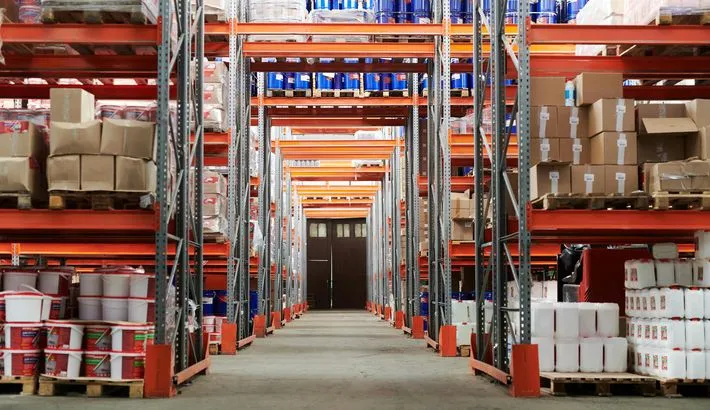
Businesses rarely choose to work with a 3PL at the very beginning. It most often comes when logistics begins to consume too many resources. For the shipper, this is the moment when order processing no longer fits into spreadsheets and manual processes. For the recipient, it's when delivery expectations begin to diverge from reality.
3PLs aren't just suitable for large companies. They are equally beneficial for small e-commerce businesses, growing brands, and businesses expanding beyond a single market. This is particularly true when the first international orders arrive, and the question arises of how to manage fulfillment without sacrificing quality.
Many people begin looking for a 3PL after understanding what it is in practice and how it transforms a business's operations. It's not just a warehouse but a hub where warehousing, inventory management, and distribution converge. This approach helps build supply chain management as a system, rather than a set of disparate tasks.
A 3PL is most often the right choice for the following types of businesses:
- growing e-commerce brands;
- direct-to-consumer businesses;
- companies with international orders;
- marketplace sellers;
- B2B fulfillment projects;
- brands with seasonal peaks.
All of these cases have one thing in common: the need for stable and scalable fulfillment. For businesses, this means the ability to grow without expanding infrastructure, while customers receive predictable service regardless of order volume.
The right time to switch to 3PL ecommerce fulfillment is often determined not by order volume but by order complexity. As sales channels, shipping carriers, and international destinations proliferate, logistics requires a systematic approach. This is when outsourced fulfillment ceases to be a risk and becomes a solution.
This step is especially important to consider when entering new markets. Cross-border e-commerce requires an understanding of customs processes, freight forwarding, and local delivery. For the shipper, this reduces risks and burdens, and for the recipient, it makes international shipping more understandable and transparent.
Ultimately, a 3PL is suitable for those who want to retain control of their business but don't want to manage every logistics process manually. It becomes a supply chain operations partner that takes on operational complexity, allowing them to focus on growth.
Conclusion
For both senders and recipients, the distribution process always boils down to one issue: how easily and reliably the package travels. Whether it's local delivery or expanding into new markets, expectations remain the same. People want transparency, predictability, and control. This is why 3PLs have ceased to be a niche solution and have become an essential part of the modern e-commerce ecosystem.
When a business adopts this approach, logistics no longer becomes a bottleneck. Orders are processed faster, fulfillment stabilizes, and supply chain management becomes manageable. For the sender, this means reduced workload and increased operational efficiency. For the recipient, it means confidence that the order will arrive on time and in the required condition.
The role of 3PLs is particularly significant when a company works with multiple destinations simultaneously. International shipping requires knowledge of customs processes and local regulations, as well as experience working with multiple carriers. Domestic shipping, on the other hand, is expected to be fast and inexpensive. Combining these two tasks without an external supply chain operations partner often leads to chaos, whereas a 3PL builds a unified approach for both scenarios.
In this context, experience and infrastructure play a crucial role. Meest has grown from a service that helped people stay connected through parcels into a full-fledged logistics ecosystem. The company integrates warehouse processing, fulfillment, freight forwarding, and delivery to dozens of countries. It makes the cross-border distribution process understandable and accessible.
For the sender, Meest offers transparent processes, digital tools, and predictable rates. For the recipient, it offers clear tracking, stable delivery times, and confidence in delivery. This approach is especially valuable in a changing global economy and amid increasing demands for speed and cost efficiency in logistics.
To share
Our news
Meest and Self Reliance Financial Federal Credit Union (SRFFCU) Announce New Partnership
Together, we are creating more opportunities for the Ukrainian community in the United States
Important Customs Requirements Update for Shipments to Armenia
We recommend reviewing these requirements before creating your shipment to help avoid possible delays.
Happy Labor Day!
Wishing you and your loved ones a safe, relaxing, and enjoyable Labor Day.

How to Address a Package for Domestic and International Shipping
Let's explore this together.
Understanding CBM in Shipping: Your Guide to Cubic Meters in Logistics
You'll avoid surprise fees and keep the whole process simple.



 Domestic