


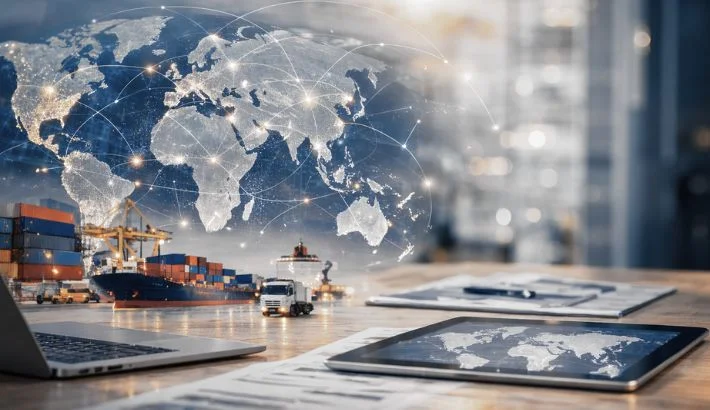
How Collaboration Is Replacing Competition In Modern Supply Chains


 To share
For decades, the global logistics industry was built on one dominant principle: scale wins.
The conventional wisdom dictated that success belonged to the largest carrier. The strategy was simple - acquire more warehouses, build a wider proprietary network, and control every single node of the delivery process. For a long time, this model of vertical integration worked.
But today, the rules of the game have changed. Scale alone is no longer the defining advantage. In fact, as we look across the modern logistics landscape, we are seeing a profound paradigm shift: some of the most resilient supply chains are not necessarily the biggest - they are the most collaborative.
Why “Bigger” Isn't Always “Better” Anymore
We see this shift most clearly in the fast-paced world of cross-border e-commerce. The global market is more volatile than ever. Tariffs shift overnight, customs policies are constantly being rewritten, and regional instability can disrupt traditional shipping routes without warning.
In this environment, a massive, rigid infrastructure can actually become a liability. When unexpected disruptions occur, the ability to adapt quickly depends not on internal size, but on external relationships.
Collaboration is actively replacing traditional, cutthroat competition because it offers tangible operational benefits:
- It reduces redundancy: Instead of building overlapping infrastructures, companies can leverage existing, optimized networks.
- It lowers costs: Shared resources and smart integrations reduce the capital expenditure required to enter new markets.
- It increases flexibility: Businesses can pivot quickly, scaling up or down by tapping into partner networks as demand fluctuates.
- It enables speed with resilience: Companies can route around disruptions instantly, ensuring fast delivery times without sacrificing reliability.
The Rise of Ecosystem Thinking
The modern supply chain is no longer a linear path controlled by a single entity. It is a hyper-connected network of specialized capabilities, ranging from first-mile pickup and middle-mile transit to customs brokerage, digital fulfillment platforms, and localized last-mile delivery.
Iurii Lisovskyi, COO of Meest USA, perfectly captures this structural shift in global trade:
“Leading operations at Meest USA, I see a structural shift happening in global trade. The era of vertical domination is fading. The era of ecosystem thinking is emerging. Modern supply chains are no longer linear. They are networks of specialized capabilities - first mile, middle mile, last mile, customs brokerage, fulfillment, digital platforms, cross-border compliance.
In Meest we’ve seen how partnership and cooperation can boost and benefit both sides. By strong cooperation with local UPS, Fedex, USPS carriers as first mile providers, with multiple collaborations with last-mile carriers in Europe, smart integrations, Meest was able to scale its products portfolio and increase the amount of delivery destinations to 170+ over the world, offering customers multiple shipping options: economy, regular, and express shipping services alongside with complex 3PL solutions.
The strongest logistics strategies today are built not by owning everything, but by partnering intelligently. Collaboration is the new competitive advantage.”
Real-World Results: The Meest USA Approach
As Iurii Lisovskyi points out, putting "ecosystem thinking" into practice yields incredible results. By shifting the focus from competing with local giants to partnering with them, Meest USA has created a highly efficient, global delivery web.
Instead of trying to replicate the robust domestic infrastructure of UPS, FedEx, or USPS, Meest integrates them as powerful first-mile providers. Instead of building a proprietary last-mile fleet from scratch in every European country, Meest collaborates with established regional experts like GLS.
The result? A deeply integrated logistics ecosystem that allows Meest to offer delivery to over 170 countries worldwide. This collaborative model directly benefits the end customer, providing a rich portfolio of shipping options - from economy to express - that are reliable, cost-effective, and fast.
The Takeaway
The future of global logistics does not belong to the companies that try to build walled gardens. It belongs to the architects of the best ecosystems. By embracing collaboration over isolation, modern supply chains can achieve the ultimate holy grail of logistics: global reach, localized expertise, and unshakable resilience.
When you partner intelligently, everyone wins - especially the customer.
To share
Our news
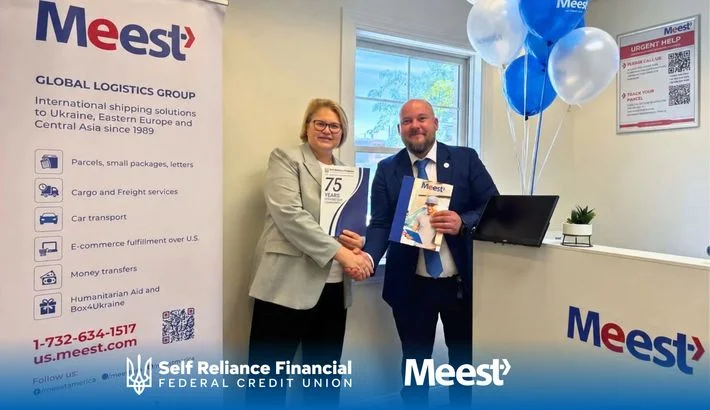
Meest and Self Reliance Financial Federal Credit Union (SRFFCU) Announce New Partnership
Together, we are creating more opportunities for the Ukrainian community in the United States
Important Customs Requirements Update for Shipments to Armenia
We recommend reviewing these requirements before creating your shipment to help avoid possible delays.
What Is a Bill of Lading, and Why Do You Need It?
A bill of lading is one of the central shipping records used in cargo transportation.

What Is a Packing List for Shipping and How to Prepare One?
A clear packing list makes it easier for all parties involved to understand what they are transporting.
What Is Freight Forwarding, and How Does It Work?
The exact setup depends on many factors we’ll cover.
Fulfillment Center vs. Warehouse: What’s the Difference?
The right choice depends on several factors we will discuss in more detail.
How Much Does It Cost to Ship a Car Overseas From the USA?
This process is rarely priced with one flat fee.

What Are Shipping Zones, and How Do They Affect Shipping Costs?
Let's explore this together.



 Domestic