


How to Ship Tires


 To share
Shipping tires is always about the distance between people, not the transaction itself. One person packs tires and worries about whether they'll arrive safely. Another waits for them in a different city or country, hoping for a pleasant delivery. There's no "seller" and "buyer" in this process – just a sender and a recipient, bound by a single logistical challenge.
Reasons for delivery tires vary. Moving to another state, changing tires seasonally, sending automotive parts to relatives or partners, or needing to transfer a complete car kit without having to buy it again. In each case, one practical question arises: "How to ship tires without overpaying and without damaging the cargo?"
For many people, shipping car parts is a relatively new experience. This isn't surprising, as such items aren't purchased daily, meaning few have experience with transportation.
Tires are heavy and bulky, and they don't fit the standard package concept. What's important here isn't speed for its own sake, but a clear process: how to pack, which parameters to specify, and what to expect at each stage of delivery. The less uncertainty, the more peace of mind both parties have.
The international transport company Meest builds logistics around precisely these kinds of life scenarios. It began with a simple idea – connecting people with parcels when distance becomes an obstacle. Today, this approach remains intact, complemented by digital tools, an online portal, a mobile app, and transparent sending terms.
This article is a practical guide. You'll learn, step by step, how to prepare tires for shipping, the delivery methods available in the US, large-scale shipping, and international nuances. All the information is presented in plain language, avoiding overly complex terms, with a focus on the sender's convenience and the recipient's expectations.
Pre-Shipping Essentials: The Groundwork
Any delivery begins long before you issue the label and calculate the sending quote. The most important stage is preparation. This is where the tire condition is determined, and any additional questions regarding weight, packaging, or carrier regulations are addressed.
The first thing the shipper should do is carefully inspect the tires. The condition of the tread and sidewall matters not only for safety but also for packaging. If you’re delivering used items, make sure to brush off any dirt and small stones first. This is especially important if you plan on further transit through sorting centers.
Next, you need to record the physical parameters. Dimensions and weight directly affect shipping costs, carrier selection, and, for freight, the NMFC-based freight class calculation. Even a few centimeters of error can change the final price. Therefore, it's best to double-check everything to ensure your box meets the standards and dimensions.
Yes, packaging plays a crucial role, and it's essential to know all the details. Before moving on to this step, it's helpful to go through a basic preparation checklist. Here it is:
- check the condition of the tread;
- clean dirt off the sidewall;
- measure precise dimensions;
- determine the total weight;
- review carrier regulations;
- prepare the cardboard in advance.
This list may seem simple, but it helps avoid common issues. When you prep tires correctly, carriers accept them faster, and sorting is easier. For the recipient, this means no deformations or unnecessary pressure marks.
You should also understand the shipment format in advance. Will the tires be sent individually, in pairs, or as a set? With rims or separately? These decisions are made before packing, not after.
Proper preparation shows respect for the recipient. It reflects that the sender considered both the shipping process and the unpacking experience.
The Most Common Method: Shipping Tires Domestically (USA)
Domestic tire delivery within the United States is the most common and straightforward option for both shipper and recipient. There are no border crossings, customs, or complex paperwork. Furthermore, carrier regulations have long been standardized. This is why domestic shipping is often the first experience for individuals and small businesses sending car parts.
For the shipper, this means fewer formalities and more control over the process. They won't need to complete additional forms or worry about customs checks. The primary focus is on packaging. It is important to accurately specify dimensions and weight and to select the appropriate delivery format. The recipient expects a consistent delivery time and a clear understanding of the condition in which the shipment will arrive.
Even within a single country, there are significant nuances. Different carriers have different approaches to packaging, labeling, and acceptable dimensions. An incorrectly labeled item or inaccurate weight information can result in a price adjustment or a delivery delay. Therefore, shippers need to review the carrier's requirements in advance and prepare wheels accordingly, taking into account the sorting stages.
In the US, there are two basic tire shipping scenarios. Not only do they differ in route, but they also differ in cargo composition and packaging requirements. The choice between these scenarios affects cost, ease of receipt, and tire protection throughout the journey.
Scenario A: Shipping Tires ONLY (No Rims Attached)
The simplest option is to deliver tires without rims. They are lighter and more compact, making them easier to handle in warehouses. The shipper can prepare them himself. This eliminates the need for industrial packaging or specialized equipment.
Before packaging, ensure that the tread is free of sharp elements and the sidewall is free of cracks. Tires are typically grouped in units of one or two. Secure them with stretch wrap. This maintains their shape and protects the surface from abrasion.
To minimize the risk of damage, cardboard discs are often added. These protect the edges, especially during sorting and transport. A label containing the shipping information is then affixed to the package.
Before handing over the tires to the carrier, pay attention to the following:
- use tight stretch wrap;
- protect the edges of the cardboard discs;
- avoid sidewall contact;
- attach a legible label;
- indicate the correct weight;
- check the package for stability.
This format is convenient for the recipient because the cargo arrives undamaged and is easy to unpack. Such an option works well for shipping spare or seasonal car parts interstate.
Scenario B: Shipping Tires WITH Wheels/Rims Attached
When you ship tires with wheels and rims, the level of responsibility goes up. This increases the weight, changes dimensions, and raises the risk of damage to metal components. However, the recipient gets a full set and can put it on right away.
In this case, packaging requires more attention. Place cardboard between the rims to prevent scratches. Secure the entire set with several layers of wrap, and use palletization to stabilize the load when you ship two or more sets.
The shipper needs to obtain an accurate delivery quote in advance. The carrier may consider the freight class, especially if the weight and volume are approaching thresholds. Some carriers use NMFC classification even for domestic shipping.
This option is the most convenient for the recipient. The wheels arrive assembled, requiring no additional logistics. This format is often used for shipping tires across country when completeness and a minimum number of shipments are important.
The Bulk Method: Shipping 4+ Tires via LTL Freight
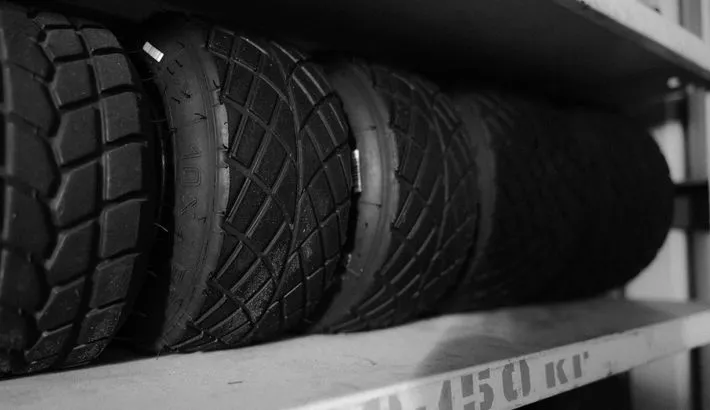
The sending approach changes as tire quantities increase. For example, if a shipper is shipping four or more car parts, individual packaging becomes less effective. In this case, the risk of misalignment grows, the number of individual pieces rises, and cargo control becomes more difficult. This is where LTL freight comes into play.
In LTL, cargo is placed on a pallet and transported with other shipments. This reduces costs for the shipper and enables the recipient to receive the entire shipment in a single delivery, rather than splitting it into multiple deliveries. This approach is especially useful for relocations, automotive work involving parts, and preparing a set of wheels for service.
Proper palletization is the key step here. Stack the tires upright or flat, then secure with stretch wrap. The pallet protects from pressure and shifting during transportation. At this stage, it is important to determine the final dimensions and weight in advance.
With LTL shipping, the carrier determines the freight class based on the NMFC. These parameters affect the cost and terms of transportation. A Bill of Lading (BOL) is also required. This waybill accompanies the shipment from the sender to the recipient and records all key data.
Before transferring tires for LTL transportation, the sender should ensure the following:
- properly palletize the entire shipment;
- secure the tires with stretch wrap;
- check the pallet stability;
- specify the correct freight class;
- issue a Bill of Lading;
- confirm the dimensions and weight.
This format is especially valuable for the recipient. All tires arrive at the same time, in consistent condition, and on schedule. Everything comes in a single delivery, without tracking multiple numbers. It saves time and helps avoid lost packages.
LTL freight is often chosen when shipping tires becomes a regular task rather than a one-time shipment. It strikes a balance between cost, control, and cargo safety.
Shipping Tires Internationally: A Complex Undertaking
When delivering outside the United States, the process becomes more complex. International tire shipping involves more than just the physical transport. Documentation, regulations, and expectations from the destination country are particularly important. The sender and recipient must understand their roles.
The first step is documentation. International delivery requires a customs declaration and a commercial invoice. These documents specify the product description, value, country of origin, and HS code. An error in one field can delay or return the shipment.
You should pay close attention to tire condition. Used and new tires can be classified differently. Carrier regulations in some countries impose additional restrictions. The recipient needs to know in advance what duties and taxes may apply.
To avoid surprises, the sender should check key points in advance:
- correct HS code of the product;
- accurate commercial invoice;
- completed customs declaration;
- calculated duties and taxes;
- used or new status;
- carrier regulations.
Once you clarify all these details, the process becomes more predictable. The recipient knows what formalities to expect, and the sender feels confident the cargo won’t get stuck at the border. This matters even more when shipping wheels to Europe, Latin America, or Central Asia.
Meest designs routes to minimize complexity. Consolidation, logistics chain optimization, and clear terms make international sending less daunting and more manageable.
Conclusion
Shipping tires is always a process that relies less on grandiose promises and more on consistent and clear actions. The process becomes less anxiety-inducing when the shipper understands how to prepare tires and the recipient knows what to expect upon delivery. It becomes a routine, manageable task.
The human factor lies behind all logistics. The shipper packs the tires, measures their dimensions, checks their weight, and ensures they retain their shape. The recipient, in turn, expects not just a box or a pallet, but the result of careful work. They receive wheels that are ready for use, with no modifications or damage.
Within the US, the process is as straightforward as possible. A customer can choose to ship with or without rims, generate a delivery quote, and be confident that the carrier complies with applicable regulations. As volumes rise, freight and palletization come to the rescue. They allow the entire set to be delivered at once, without unnecessary hassle.
When it comes to international routes, the responsibility increases. Documentation, regulations, and the differences between used and new tires require attention to detail. This is where transparency is especially important. You must clearly understand that international shipping shouldn't turn into a lottery with unexpected fees or border delays.
Meest organizes its operations so that both parties – the sender and the recipient – feel in control of the process. The company offers modern, useful tools, including an online portal, a mobile app, an extensive network of drop-off points, and support at every stage. These tools allow for a clear chain of events from the first step to delivery. This is especially valuable when sending between countries and continents.
Over 35 years, the company has grown from a diaspora service into a global logistics partner. The essence remains the same, though: connecting people, businesses, and markets when distance becomes a barrier. Whether you're sending tires for personal use or regularly delivering automotive parts, our approach remains the same: simplicity, transparency, and respect for both parties.
Ultimately, high-quality delivery is about the sender's confidence that they've done everything right. This also reflects the recipient's confidence that the shipment will arrive in the expected condition. When both sides meet these expectations, logistics works the way it should.
To share
Our news

Meest and Self Reliance Financial Federal Credit Union (SRFFCU) Announce New Partnership
Together, we are creating more opportunities for the Ukrainian community in the United States

Important Customs Requirements Update for Shipments to Armenia
We recommend reviewing these requirements before creating your shipment to help avoid possible delays.

Happy Labor Day!
Wishing you and your loved ones a safe, relaxing, and enjoyable Labor Day.



How to Address a Package for Domestic and International Shipping
Let's explore this together.

Understanding CBM in Shipping: Your Guide to Cubic Meters in Logistics
You'll avoid surprise fees and keep the whole process simple.



 Domestic