


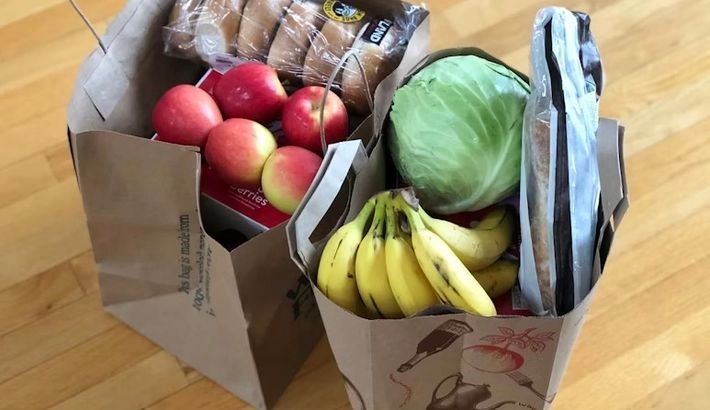
How to Ship Food


 To share
Shipping food is a job that, on the surface at least, seems simple and even mundane. Actually, this method involves quite a deep understanding and careful attention to endless details.
Picture this: You have a favorite homemade recipe that, for whatever reason, you want to share with a friend or relative who happens to reside in another city, state, or even region of the country. Delivery is about more than speed. Packaging, temperature control and following all carrier rules and safety guidelines are very important.
Food is living and sensitive cargo. It's understandable why many people ask, "How to ship food?" Improper handling can lead to rapid spoilage, altered flavor, loss of nutritional value, and even pose a health risk to the recipient.
When transporting perishable foods, inadequate refrigeration or excessive transit time can lead to bacterial growth and other undesirable processes. Therefore, it's essential to consider every step carefully. You must select the appropriate packaging type, shipping method, parcel labeling, and other important considerations.
Today, it's completely normal to ship food across country — online carriage and delivery services have made this easier than ever. That's why every shipper should know a few basic rules and practical tips to ensure food arrives safely and in good condition. This will help ensure that the recipe reaches the recipient fresh, tasty, and safe. Your package will be processed in full compliance with carrier and regulatory standards.
The First Golden Rule: Perishable vs. Non-Perishable
The first thing you need to understand is the fundamental product division. Roughly, there are two broad categories:
- perishable;
- non-perishab.
Perishable products are fresh or chilled goods. They require temperature control. This category includes meat, fish, dairy products, fresh vegetables, fruits, and homemade baked goods. These products are susceptible to temperature changes and transit time. Without special care and proper packaging, they quickly lose quality and become hazardous.
To transport perishable products, companies, or couriers typically use special insulated shipping boxes with cooling elements. Shippers use dry ice for frozen products and gel packs for chilled items. In this case, airtight packaging is crucial. To prevent leaks and preserve freshness, it can be vacuum-sealed or stored in an airtight container.
Non-perishable products include dry goods, canned goods, and commercially packaged goods. They can be stored for a long time without refrigeration. This includes cereals, spices, coffee, tea, cookies, and many other shelf-stable products. Their transportation is simpler. The process doesn't require complex temperature conditions; it only requires reliable packaging and protection from damage.
How to Ship Non-Perishable Food (Domestic USA)
Shipping non-perishable food within the United States seems quite simple, but there are some things to consider. Complicated procedures aren't required.
But, in spite of the comparative simplicity you may need to handle, some important rules and subtleties should be paid respect to. These will help you keep your food fresh and keep your package safe, no matter where it is traveling. Eventually, however, even long-life products can still be ruined by poor packaging, mechanical damage, or moisture exposure.
Promotional Packaging Proper packaging and the selection of a sturdy box and fill material can safeguard transmission from your hands to ours to who you want...without having to count on brown-river mishaps. And you should also think about carrier restrictions. This is because some products may fall under the categories of restricted foods or even prohibited items, despite their long shelf life.
Packaging and Preparation
First and foremost, choose a durable shipping box of the appropriate size. It should be strong enough to protect the contents from shocks and vibrations during transit. To prevent damage, shippers should use soft cushioning materials. Bubble wrap, foam, or paper fillers are all excellent options. This is especially important if the shipment contains multiple individual packages.
Make sure you securely seal all products to keep moisture and odors out. For bulk goods or powders, you can use vacuum-sealed bags or airtight containers. These will prevent spillage and preserve freshness.
If you are shipping commercially packaged products, make sure the original packaging is intact. Damaged products may raise concerns with the carrier or recipient.
Choosing a Shipping Method
When shipping non-perishable products within the United States, standard ground shipping is sufficient. This option is the most cost-effective and also quite reliable.
Products with a long shelf life do not require exceptional temperature control or expedited shipping. However, choosing the correct shipping method will help avoid damage and delays. You will also reduce the risks associated with improper handling of your package.
Check the carrier's regulations — each airline may have its own rules regarding which goods are permitted for shipment and which are prohibited or restricted.
Even if a product does not require refrigeration, it may be restricted from shipping. This may be due to local laws or the carrier's internal policies.
Key factors to consider when choosing a carriage method include:
- delivery speed (ground, express, overnight);
- parcel tracking;
- volume and weight regulations;
- prohibited items;
- packaging requirements;
- cargo insurance;
- international shipping options.
Each of these factors impacts the final result. Therefore, it's essential to check all the details in advance and ensure the chosen option is best suited for your parcel type and the nature of your products. This will help you avoid issues with the carrier and ensure timely, safe delivery.
Labeling and Documentation
Precise and accurate parcel labeling plays a key role in the delivery process. It helps avoid confusion, delays, and improper handling. Proper labeling is not only the sender's responsibility but also ensures that your parcel is handled carefully and quickly at warehouses and delivery services.
When carrying non-perishable products, you should clearly label the box, such as "Dry packaged food — non-perishable.” This immediately informs workers of the cargo's nature, allowing them to sort the parcel properly.
If products are being shipped for commercial purposes — for example, for sale or to business partners — you must include all necessary documents with the parcel. First and foremost, this is an invoice, not a tax invoice. It confirms the value and origin of the goods. Such documents are essential for carriers and tax authorities. They simplify customs clearance if necessary.
If you're sending products as personal gifts to friends or family, strict documentation isn't usually required. However, it's a good idea to include a brief and precise description of the package's contents. This helps the recipient better understand what's inside. It also helps expedite the inspection process should the package be subject to additional scrutiny.
How to Ship Perishable Food (Domestic USA) — A Step-by-Step Guide
An equally important question is "how to ship perishable food?" Transporting such goods domestically requires the utmost care and attention at every stage of the logistics process.
These products are susceptible to temperature and delivery time. Minor deviations from the recommended conditions can lead to rapid spoilage, changes in flavor, and a loss of quality. Improper packaging or delays during transit can ruin all the shipper's efforts.
To maintain the freshness, safety, and original properties of your products, it is essential to plan every step:
- choose appropriate insulated packaging;
- use reliable cooling elements;
- select the optimal shipping method with minimal transit time.
The detailed, step-by-step approach below will teach you how to ship perishable foods within the United States. It will teach you how to do so safely and efficiently.
Step 1: Preparing Products and Packaging
Shippers should select products based on how quickly they can spoil. Fresh meat, fish, dairy products, and homemade baked goods require the utmost care.
You should use a special liner, called an insulated box. This helps maintain the desired temperature. Place cooling elements inside the box, shippers. Two options are available:
- Dry ice for frozen foods: it maintains a low temperature for a long time, but requires careful handling.
- Gel packs for chilled, not frozen, goods are safe and convenient, but they retain cold for a shorter period.
Be sure to use airtight packaging. Products should be in vacuum-sealed bags or airtight containers. This prevents leaks, prevents odor mixing, and enhances the package's security.
Step 2: Temperature and Delivery Time Control
Temperature control is the foundation of the successful delivery of perishable products. Any deviation from the recommended temperature can lead to rapid spoilage, loss of flavor, and even pose a health risk to the recipient. Therefore, you should carefully ensure that products remain cold or frozen throughout the entire journey.
Senders should choose overnight shipping or the fastest available delivery method. This will minimize transit time and avoid unwanted temperature fluctuations. Many carriers offer specialized temperature-controlled services that maintain the desired temperature inside the package.
If available, be sure to include a thermometer or temperature indicator in the package. The recipient can use it to confirm that the products traveled under proper conditions and remain fresh and safe.
Step 3: Labeling and Recipient Notification
Labeling is critical when shipping perishable products. Clear and visible labeling on the box helps all parties in the supply chain. Sorting center staff and couriers immediately understand the nature of the shipment and the need for special handling.
Such markings reduce the likelihood of improper sorting, prolonged storage outside of refrigeration, and other errors that could negatively impact food quality. The following markings should be included on the box:
- perishable food inside;
- keep it refrigerated;
- keep frozen during transit;
- handle with care;
- time-sensitive shipment.
In addition to proper marking, it is equally important to notify the recipient in advance of the delivery date and estimated time. This way, they can prepare for the package, pick it up promptly, and immediately ensure proper storage conditions.
Good and timely communication between the sender and recipient significantly reduces the risk of food spoilage. Moreover, it makes the entire delivery process more reliable and safe.
The International Minefield: Shipping Food Across Borders
International shipping is one of the most complex and closely regulated areas of logistics. Many shippers are unaware of the strict rules and restrictions they face en route to their recipients abroad.
This is because each country sets its own requirements for imports. These include various safety checks, product composition, packaging, and origin. Ignorance of these regulations can lead to delays, additional costs, or the complete loss of the package.
This is why international food carriage must be considered a separate, particularly sensitive process. It requires advanced preparation and careful study of all regulations.
Important Warning
If you're wondering how to ship food internationally, you should understand one crucial fact right away. International food carriage is among the most complex and highly regulated forms of transportation.
Many countries have strict sanitary, veterinary, and phytosanitary regulations. These are aimed at protecting public health and local ecosystems. Customs authorities may completely ban even common and seemingly harmless products from import.
Stringent restrictions apply to perishable and homemade foods. Shipping perishables abroad is almost always impossible. Such parcels do not undergo customs control and are often destroyed without being returned to the sender.
Such transportation carries the risk of spreading bacteria, diseases, and pests, as well as a lack of confirmed data on the composition, origin, and production conditions of the products. Therefore, any international food shipment requires the utmost caution and prior verification of the destination country's regulations.
The Main Rule
When shipping products internationally, there's one key and almost universal rule: only commercial food may be shipped. This refers to factory-produced products that have passed all necessary tests, are factory-sealed, and correctly labeled.
Shelf-stable products do not require special storage conditions or strict temperature control. These products are considered safe for transportation. Provided all formalities are met, they are permitted for import into most countries.
Commercial products permitted for international shipment generally have the following characteristics:
- factory-sealed packaging;
- complete ingredients and labeling;
- long shelf life;
- no temperature requirements;
- safety certificates.
Homemade food, including baked goods, preserves, and any products, is almost always prohibited from international shipment. Even if it is carefully packaged, appears safe, and is being sent as a gift, customs authorities consider such products a potential risk.
The lack of an official manufacturer, certificates, and confirmed composition makes it unacceptable for import. Therefore, in most cases, such parcels end up confiscated or returned to the sender.
What Can't You Ship?
When shipping food internationally, there's a strict list of items that are strictly prohibited. This is due to the risk of spreading diseases and pests, as well as sanitary violations, in destination countries.
If you attempt to ship such products, you'll almost always face a customs delay, confiscation, or the package being returned to the sender. Prohibited items typically include:
- fresh fruits and vegetables;
- meat and fish;
- dairy products and eggs;
- homemade dishes and baked goods;
- certain spices and beverages with restrictions;
- any uncertified or untested goods.
When carrying food, you should familiarize yourself with these restrictions in advance and avoid including prohibited items in your package. This will not only save you time and money but also help you avoid unpleasant situations with customs officials.
What Can (Is) You Can Ship?
Shipping food internationally is subject to numerous restrictions. However, specific categories of goods are often permitted, provided all regulations are met. Remember that even permitted products must be packaged appropriately and have the necessary certificates. This ensures they will successfully pass customs inspection and arrive intact.
Here are the main types of products that are generally permitted to be shipped:
- canned and dry goods in their original packaging;
- coffee, tea, and spices in sealed packaging;
- long-life products that do not require temperature control;
- commercial food with whole labeling and certificates.
However, even for these categories, you should check the import regulations of the specific destination country in advance. This is because requirements can vary greatly. You must also comply with all carrier terms and provide complete and accurate documentation to avoid delays and returned packages.
Documentation and Paperwork
When transporting food products internationally, special attention is paid to proper paperwork. This is crucial. Without it, the shipment may be detained at customs or even returned to the sender.
Each country has its own requirements. Therefore, it is crucial to prepare a complete set of necessary documents in advance. For international shipping, the following are required:
- customs declaration — a detailed description of the contents, value, and destination;
- for the US and some other countries — an FDA Prior Notice or similar notifications for food products;
- accompanying documents confirming the safety and origin of the goods.
Incorrect or incomplete documentation can lead to severe delays, additional inspections, fines, or the return of the package. To avoid such problems, carefully review the requirements of the destination country and the carrier and prepare all the necessary paperwork in advance.
By following all these rules, you can safely ship food abroad, avoiding customs issues and quality loss.
Conclusion
Shipping food requires care, responsibility, and a basic understanding of logistics and safety principles. Clearly distinguishing between perishable and non-perishable products is a key step. This determines the choice of packaging, delivery method, and the need for temperature control.
When people ask, "How to ship frozen food?" they should understand the intricacies of this procedure. In this case, insulated boxes, refrigeration units, and the fastest possible delivery options are used. Products with a long shelf life, on the other hand, allow for simpler solutions — such as sturdy packaging and standard protective measures.
When shipping within the United States, the sender should research carrier requirements in advance, comply with carrier regulations, and pay special attention to labeling and packaging. International shipping requires even greater caution. You should ship only approved commercial food that complies with import regulations and correctly complete all necessary paperwork.
You can safely and confidently ship food across the country and abroad, preserving the quality, safety, and taste of your products and avoiding unnecessary risks and unpleasant surprises. The key is to know all the rules and use them effectively.
To share
Our news

Meest and Self Reliance Financial Federal Credit Union (SRFFCU) Announce New Partnership
Together, we are creating more opportunities for the Ukrainian community in the United States

Important Customs Requirements Update for Shipments to Armenia
We recommend reviewing these requirements before creating your shipment to help avoid possible delays.

Happy Labor Day!
Wishing you and your loved ones a safe, relaxing, and enjoyable Labor Day.


How to Address a Package for Domestic and International Shipping
Let's explore this together.
Understanding CBM in Shipping: Your Guide to Cubic Meters in Logistics
You'll avoid surprise fees and keep the whole process simple.



 Domestic