


The Ultimate Guide to Pallet Shipping for E-commerce


 To share
If you plan to scale your online store, you need to review your logistics model early. The owner will have to review the entire logistics structure. At first, sending individual parcels works fine. As customer demand increases and regional distribution networks expand, relying only on traditional parcel delivery services is inefficient and expensive. An online business that wants to grow sustainably must go beyond loose cargo management strategies.
Implementing pallet shipping is an effective strategy that streamlines processes and helps a business gain a competitive advantage over other brands. When the volume of operations grows to the point where you move dozens of large boxes to regional hubs, consolidating individual packages on pallets makes strategic sense.
The consolidation process minimizes transit costs. The seller does not need to control every operational step independently, and the transportation of bulk cargo is optimized to meet specific needs. Such an approach makes it possible to enter the international market, serving a larger number of customers. Clear visibility over the movement of goods remains important for stable distribution.
Freight logistics takes a completely different approach to handling shipments and documents. Online sellers put this issue aside, believing that cargo consolidation is too complicated. In fact, logistics ecosystems are built in such a way that heavy loads can be transferred more affordably. By mastering the basics of palletized transportation, you can process orders of any complexity much faster. Find out how shipping a pallet makes business practical and profitable in the material below.
What is Pallet Shipping?
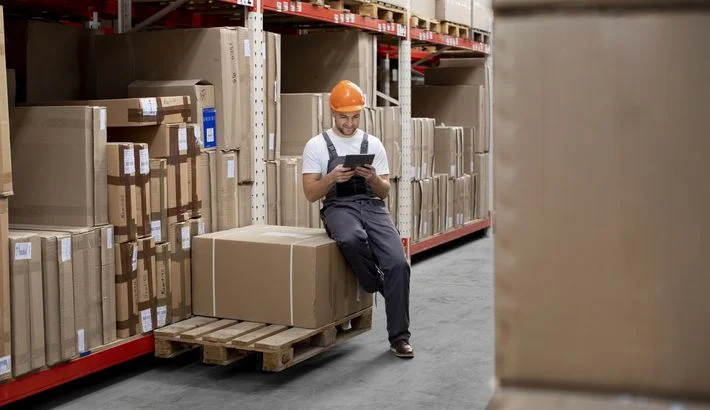
First, let's understand what pallet shipping is. This is a logistics method where several boxes, goods, and cargo are combined on one strong flat platform to facilitate loading and unloading. Warehouse workers do not need to manually handle heavy boxes one by one. Now one forklift operator can safely lift, move, and stack one unit for transportation in a matter of minutes.
For this, standard shipping pallet size options are used. They are made of durable wood, composite materials or plastic polymers, ensuring comfortable interaction within the warehouse infrastructure. Businesses can meet deadlines more easily by combining several product groups into one pallet.
Such a strategy has several significant features. Consolidation can completely change the basic commercial economics. Such a system allows you to access competitive international pallet shipping rates for businesses and customers. To better imagine these operational changes, pay attention to the following structural changes:
- product protection — you eliminate the displacement of internal boxes, which prevents falling and reduces the risk of structural damage;
- lower labor costs — warehouse staff now spend less effort moving goods, it is enough to use unloading machines, which optimizes warehouse costs;
- better storage density — standard platforms use vertical rack space, which increases the total area throughout the distribution center;
- optimized inventory tracking — a single tracking number simplifies delivery control and reduces administrative errors in distribution corridors.
A single industrial-grade consolidation strategy allows digital store owners to stabilize the predictability of the supply chain and the operational network. The shipping pallet network operates on structured transportation schedules.
This way, your operations team can accurately determine the time of physical arrival, plan specific warehouse workforce configurations, and reduce delays. Standardized pallets can expand the delivery network and drive commercial growth, completely changing the entire approach to logistics.
The Art of Palletizing: A Step-by-Step Guide
Proper palletizing plays a crucial role. Strict physical stacking rules and protective packaging guidelines must be followed. For example, if the warehouse team builds an unstable structure, the pallet is likely to collapse during high-speed movement. This will lead to damage to the inventory and rejection of the goods by the recipient.
An effective pallet requires that the individual boxes be packed tightly. In this case, the load can withstand the vibrations of the transport during movement and vertical pressure. Careful planning ensures that the goods will pass through the cross-dock terminals safely without any scratches. Warehouse managers must follow a standardized preparation sequence. Only then will the cargo meet international shipping requirements.
Several steps must be taken before physical processing. Your order fulfillment team must assess whether the consolidated cargo will be classified as stackable or non-stackable by global carrier networks. By choosing a loading style, handlers can place a second unit directly on top of another one inside the truck or container, optimizing space and ensuring lower pallet shipping rates.
If your load contains fragile items, it must be considered non-stackable. This means that carriers cannot place other packages on top of yours. This is why it takes up more vertical space in the vehicle, which leads to increased transportation costs. By ensuring the outer packaging is strong, you can be sure that you are making the most of the available space according to your specific requirements.
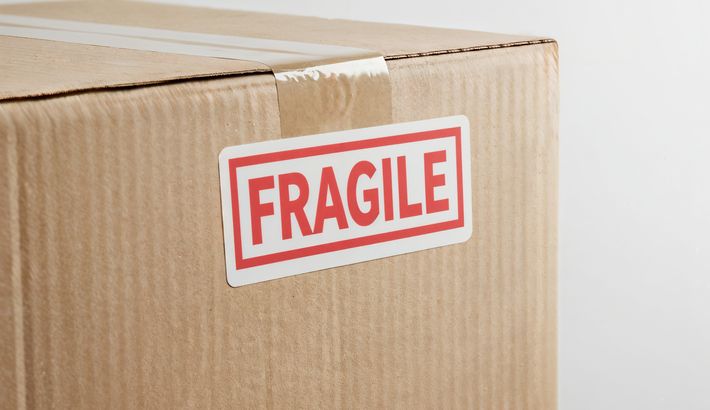
There are some details that you should not forget. An incorrectly stacked platform is very vulnerable to shifting, tilting, or serious damage. Make sure that the stronger boxes support the base of the structure. Otherwise, valuable packages can be broken. To stack pallets for delivery as efficiently as possible, it is worth following a few simple steps:
- Inspect the base platform. Choose a quality, undamaged wooden or plastic platform without cracks, missing deck boards, or dangerous exposed nails. The structure should be stable, as simple as possible, without unnecessary details.
- Implement the correct arrangement of columns. Align the cargo boxes in a perfectly straight order. They should be laid out from corner to corner and edge to edge to use the strength of the cardboard walls to the fullest.
- Eliminate dangerous structural shapes. Keep the top layer completely flat. Never stack items in a pointed pyramid. This completely reduces the stacking potential and leaves the top corner boxes vulnerable.
- Use industrial protective stretch film. Wrap the entire load with quality stretch film in at least five layers. All vulnerable areas should be securely wrapped so that the entire load is combined into one structure.
- Install strong protective edges. Pre-place rigid plastic or thick cardboard protective corners along each vertical corner. This will distribute external pressure, which will reduce the likelihood of dents.
After applying the stretch wrap, the cargo forms a single unit without internal displacement. If you can push out at least one box without issue, you need to review the placement before shipping. In addition, you should make sure that each cardboard box does not hang from the outer edges of the pallet. Even one centimeter of overhang reduces the overall compressive strength from top to bottom by up to 30%. Proper alignment reduces the risk of financial losses and optimizes logistics workflows.
Getting Ready to Ship: The Paperwork
Successful commercial logistics depends not only on the correct packaging. It is also necessary to carefully prepare the documentation in accordance with cargo classification requirements. For palletized shipments, businesses need to have legally binding contracts for delivery and customs declarations.
Incorrectly indicated industrial weight, omission of the reference code, or other inaccuracies will lead to the refusal of transportation. To reduce financial losses, carefully check the transport papers before shipment.
The most important document is the Bill of Lading (BOL). It serves as both a commodity receipt and a transport contract between the shipper and carrier. The BOL details the place of collection, coordinates of the final destination, total number of units, and key metrics of the cargo. It must clearly reflect the unique NMFC number.
It is also necessary to indicate the exact freight class. It determines the features of cargo handling and pricing based on the risk profile of cost, density, and security.
In addition, a special packing list must be attached to a transparent, waterproof plastic bag. With this document, dockers and customs officers can check the exact contents of the cargo without tearing the protective stretch wrap. Each document has a specific purpose and should include accurate shipment details:
| Document Name | Primary Purpose & Operational Function | Critical Fields & Metrics Required |
|---|---|---|
| Bill of Lading (BOL) | Acts as a legally binding contract between the shipper and carrier, tracking the entire chain of custody. | Addresses, NMFC Number, Freight Class, Total Weight, Handling Units. |
| Packing List | Provides a granular breakdown of every item contained within the wrapped cargo block for warehouse and customs use. | SKU Numbers, Individual Item Quantities, Net/Gross Weight, Packaging Type. |
| Commercial Invoice | Establishes the true transaction value of the shipped goods, primarily used for calculating customs duties and import taxes. | Buyer/Seller Info, Detailed Harmonized System (HS) Codes, Total Value, Currency. |
| Certificate of Origin | Officially certifies the country where the retail products were originally manufactured or produced. | Exporter Details, Country of Manufacture, Government Authority Stamps. |
To properly determine the volume of cargo, a standard metric is used. A Cubic Meter (CBM) is required to accurately calculate the international pallet shipping rate. To find this parameter, you need to measure the length, width, and height of a fully wrapped cargo and get the final result.
Check that the physical measurements are accurate. Carriers regularly check the dimensions of the cargo using laser scanners during transit through the terminal. If your documented measurements are inaccurate, the carrier has the right to adjust the calculations. This will lead to significant financial losses. That is why compliance with documentation is an important stage in the supply chain.
How Meest Simplifies Your Pallet Shipping?
Managing logistics yourself is not always an easy process for e-commerce companies. That is why it is worth choosing a reliable logistics provider like Meest. It removes any barriers and operational complexity.
One of the key advantages is the availability of LTL freight solutions. They are tailored for mid-range brands that do not require a full dedicated truck. The shared network consolidates your cargo with other shipments, which gives you instant access to distribution channels.
This consolidation model reduces the initial capital requirements, allowing you to maintain a low level of inventory and offer competitive rates for pallet shipping domestically and internationally. Furthermore, the order team can immediately calculate the cost of the cargo, making the process more controllable at all stages.
In addition to standard terminal-to-terminal transportation, Meest offers a comprehensive network of order fulfillment, warehousing, and customs clearance support. It is designed specifically to handle all complex logistics workflows. Warehouses are equipped with everything you need to manage every step of the physical supply chain.
A team of licensed in-house customs specialists oversees international documentation to optimize the system to ensure smooth order fulfillment and reduce terminal delays. The logistics network helps businesses reduce freight-related costs and direct resources to attract new customers. This approach allows them to scale their operations internationally without unnecessary costs.
Conclusion: Ship Your Freight with Confidence
The transition to palletized shipping is an important stage that opens up a large operational scale in the future. Such an approach optimizes costs and allows you to predict any additional expenses in the process. Having learned to correctly choose the ideal pallet sizes and prepare documentation, you streamline the work of the brand and reduce the logistical burden.
The initial stages of the transition seem difficult, but the direct financial benefit in the long run makes the effort worthwhile. A significant reduction in the cost of delivering a unit of goods and minimizing the level of product damage are undeniable advantages. Logistics becomes not only a support function, but also an important driver for development in the international market.
You do not need to go through this entire process yourself. A reliable freight forwarder reduces the risks for your business. It ensures a successful launch in the field of wholesale logistics, offering ready-made solutions.
Working with a proven partner like Meest, you get access to practical logistics tools, and a freight quote takes less time to prepare. Professionals handle all administrative customs procedures and terminal coordination, allowing your team to fully focus on the commercial tasks of the store.
Taking the first step towards expanding palletized logistics can be manageable. It is worth reviewing all the key stages in advance and following the clear instructions. And if you have any questions, you can always ask for help from experts who can clarify the next steps.
To share
Our news

Meest and Self Reliance Financial Federal Credit Union (SRFFCU) Announce New Partnership
Together, we are creating more opportunities for the Ukrainian community in the United States
Important Customs Requirements Update for Shipments to Armenia
We recommend reviewing these requirements before creating your shipment to help avoid possible delays.
What Is a Bill of Lading, and Why Do You Need It?
A bill of lading is one of the central shipping records used in cargo transportation.

What Is a Packing List for Shipping and How to Prepare One?
A clear packing list makes it easier for all parties involved to understand what they are transporting.
What Is Freight Forwarding, and How Does It Work?
The exact setup depends on many factors we’ll cover.
Fulfillment Center vs. Warehouse: What’s the Difference?
The right choice depends on several factors we will discuss in more detail.
How Much Does It Cost to Ship a Car Overseas From the USA?
This process is rarely priced with one flat fee.



 Domestic