


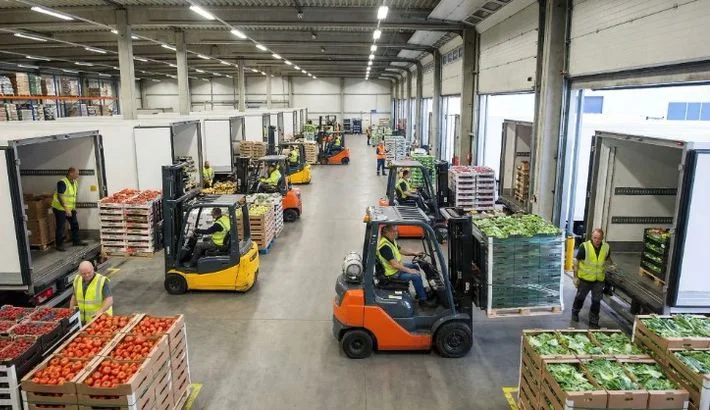
Retail and commerce nowadays require reliable and highly effective solutions that help businesses speed up their service and ensure that customers receive their orders as soon as possible. The cross-docking process is a method that allows them to achieve such a result. The question “What is cross-docking?” is particularly relevant for businesses that want to reduce storage time and improve the movement of goods through distribution facilities.
How Does the Cross Docking Process Work?
Cross-docking is a logistics method that ensures that products spend as little time as possible at warehouses. In a cross-docking warehouse, goods are unloaded, checked, sorted by destination, and transferred to outbound vehicles with minimal or no storage.
One of the examples of this approach is with cargo that arrives by sea. You may have several containers with products arriving at a port. The goods are transported to a cross-docking facility, where they are unloaded, sorted, and loaded onto outbound trucks for delivery to their final destinations.
What Are the Main Types of Cross Docking?
The reviewed approach can reduce a company’s reliance on warehousing services (particularly when goods move through the facility without long-term storage). Two main types of cross-docking differ based on when shipment destinations are assigned. It is essential to know the difference between them in order to choose the one that meets all the requirements of your business.
Pre-Distribution vs. Post-Distribution Cross Docking
Pre-distribution is the most basic type. The destination of each shipment is determined before the goods arrive at the facility in pre-distribution cross-docking. It may involve several operations before the distribution of products to customers, namely:
- receiving;
- unloading;
- sorting;
- repackaging.
These processes are based on a pre-established distribution instruction. Moreover, items stay in the facility only for a short time. Why? The staff there are aware of the end customer even before the supplier ships out the goods, so they are able to load necessary items into the appropriate trucks immediately.
This type can be suitable for those retailers who have their own warehouses. This can give them greater control over distribution processes and coordination with customers and suppliers.
With post-distribution, goods may remain at the facility briefly while their final destinations are determined based on current demand. It is a short period of time until the end customers are known.
This approach offers greater flexibility when demand or delivery requirements change. Retailers are able to make smarter decisions regarding shipping, inventory, sales forecasts, and trends. This gives them a chance to organize their business more efficiently. Such a method allows retailers to take into consideration many factors, including customer preferences, weather conditions, and season.
Cross-docking can also be classified by how shipments move through the facility. Unlike pre-distribution and post-distribution, which describe when destinations are assigned, these methods show how goods are transferred, combined, or divided. The classifications can overlap.
Continuous, Consolidation, and Deconsolidation Cross Docking
Cross-docking is suitable for all modes of goods transportation. It can be applied to the freight that arrives by ground, air, or sea. The following three methods describe how shipments can be processed at cross-docking facilities.
The continuous method means that goods move in a constant flow. Thus, they are unloaded from one vehicle and loaded into another with minimal or no storage time. It provides more efficient use of resources in a terminal.
Imagine a logistics hub where a truck carrying imported electronics arrives at dawn. Workers immediately transfer the pallets onto a waiting railcar without storing them in a warehouse. In such a case, goods are transported with no delay.
The alternative is freight consolidation. In consolidation cross-docking, several smaller shipments traveling in the same direction are combined into a larger outbound load. For example, goods from different suppliers can be loaded onto one truck serving the same distribution area. Brief staging may be necessary until the outbound load is ready.
It may seem to be less efficient, but it has its benefits. One of them is that the facility needs to handle fewer shipments. This method may reduce transportation costs.
Deconsolidation is the opposite of consolidation. When it is used, large shipments are divided into smaller ones. This is a perfect choice for businesses that use fulfillment or direct-to-consumer sales. It can help limit additional handling. Shipment deconsolidation makes last-mile delivery right from cross-docking facilities possible.
Benefits and Challenges of Cross Docking
This process is not a one-size-fits-all solution. It has its benefits and challenges that should be analyzed closely. Remember that it can be perfect for one type of business, but completely unsuitable for another.
One of the main benefits of cross-docking is the possibility of having smaller expenses on logistics. There are several ways to achieve these advantages, including reduced storage requirements, fewer handling operations, and potentially lower transportation costs.
Faster distribution can be a perfect option for those businesses that use fulfillment services to deliver goods to the final destinations. It may shorten delivery times when shipments are properly coordinated. You can quickly divide big packages into smaller ones when volumes are large — to increase shipping efficiency.
Cross-docking leads to less handling. Such a method limits the number of times goods are moved from dispatch to final delivery. As a result, there is a lower risk of damage, misplacement, or contamination. Furthermore, this approach can improve supply chain efficiency by reducing unnecessary handling.
However, there are challenges, sure. And scheduling difficulties are among them. Cross-docking relies on coordinated goods movement and minimizes the storage stage. As a result, accurate timing becomes critical. The entire process can stall if inbound shipments and outbound shipments do not align perfectly.
Indeed, a minor delay at the start of a route can lead to vehicle congestion near the unloading point and cause additional difficulties, such as missed delivery windows, overtime costs, or excessive strain on resources. Unlike traditional warehouses, cross-docking facilities typically have limited capacity for temporary storage. This makes accurate scheduling and timing especially important.
It is difficult to manage coordination among numerous stakeholders — and it is another challenge. Suppliers, transporters, warehouse operators, and final customers must synchronize their work to keep the flow of goods at the facility uninterrupted. But each party has its own schedules, requirements, and constraints. So, planning can be complicated.
Besides, different products often need specialized handling. Some may require temperature‑controlled environments; others have strict expiration dates or fragile packaging. As a result, any actions with such diverse goods at a cross-docking facility demand advanced systems, skilled staff, and clear communication.
Businesses remain vulnerable to supply chain disruption. It often happens because of less inventory and shorter lead times. Indeed, keeping cargo loading and unloading times synchronized is quite challenging. These operations are vulnerable to unexpected disruptions such as weather conditions, transportation delays, or sudden increases in demand.
Cross Docking vs. Traditional Warehousing
It is not rare that businesses confuse cross-docking and traditional warehousing. However, these are two entirely different concepts. They are designed to serve various purposes. Cross‑docking emphasizes speed and efficiency, as the storage stage is minimized.
Traditional warehousing, by contrast, focuses on holding inventory for extended periods. So, they provide good protection against fluctuations and offer excellent solutions for the prevention of supply chain disruptions.
| Cross-docking | Traditional Warehousing | |
|---|---|---|
| Storage requirement | No long-term storage | Designed for stockholding |
| Goods handling | Direct transfer between vehicles | Multiple handling and shelving |
| Inventory management | Shipment tracking and flow coordination | Stock tracking, storage control, and replenishment |
| Operational flexibility | Dependent on precise coordination | Can absorb demand fluctuations |
Efficiency and speed are two of the main aspects worth discussing. Cross-docking is all about fast services. It minimizes the need for storage by efficiently loading and unloading the products into vehicles ready for transportation. This approach can shorten the time between the order and delivery for customers. Meanwhile, warehousing is about the long-term storage that is necessary for longer-term stockholding.
The cost is another feature that differentiates these two concepts. The reviewed method usually uses less space and fewer resources for storage — it may be a more cost-effective option (only partially, though). Traditional warehousing typically involves higher storage expenses, while inventory turnover depends on how quickly products are sold or replenished.
The cross-docking vs. traditional warehousing comparison is essential. The latter generally offers greater flexibility in handling demand fluctuations and inventory levels. Cross-docking is more beneficial when there is a consistent flow of goods and precise coordination.
When Should Businesses Use Cross Docking?
Such a logistics strategy is most effective in situations where speed, reliability, and minimal storage are critical. These include:
- e‑commerce;
- retail distribution;
- time‑sensitive shipments.
They can benefit from the fact that goods can move directly from suppliers to customers with little or no warehousing.
Businesses can also use this approach when they need to make the supply chain work more efficiently. For example, a distribution center may receive shipments of clothing from multiple suppliers, sort them by store destination, and immediately load them onto outbound trucks. This can reduce storage costs and help stores get fresh inventory with fewer delays.
Cross-docking is the right choice for time-sensitive shipments. It is used by industries dealing with perishable goods, pharmaceuticals, or urgent spare parts. Why? Such an approach is ideal for meeting tight deadlines. Moreover, companies can lower storage time and reduce the risk of spoilage or obsolescence. This method can also support just-in-time inventory strategies when incoming deliveries are closely coordinated with distribution needs.
Here’s what it looks like in practice. A regional hub receives a shipment of fresh products. Workers sort and load them directly onto delivery trucks (they do not place goods in a warehouse). As a result, these items are heading to supermarkets the same day.
In e-commerce, cross-docking enables companies to process pre-sorted shipments that have known destinations. For instance, products arriving from suppliers can be transferred directly to outbound vehicles for delivery to regional hubs or customers. This requires careful planning across the entire distribution network.
Conclusion
Cross-docking is a powerful logistics approach. It is the right choice for companies that prioritize speed, efficiency, and reduced storage costs (through minimizing the storage time items spend in warehouses). Such an approach can be especially effective in e-commerce, retail distribution, and the transportation of perishable goods, where timely delivery is important.
Unfortunately, it is not perfect for every business; the approach has a range of challenges that should be overcome for it to function successfully. Accurate scheduling and close coordination between suppliers, transporters, and those performing warehouse operations are among the major challenges. Without those aspects, congestion, missed delivery windows, or higher costs become more probable.
Thus, it is important for businesses to analyze the advantages and disadvantages of cross-docking against their logistics requirements. That’s the way to decide if this method is the best option for them. The right choice mostly depends on a company’s product type, customer expectations, and operational capacity. So, businesses should weigh all the factors before they integrate it into their logistics strategy.


 To share
Our news

Ukrainian Angel Tree 2026: Become Santa for a Day
Join us in making Christmas wishes come true with the Voices of Children Foundation and Meest!
What Does an Estimated Delivery Date Really Tell You?
We would like to focus on the most vague one — the estimated delivery date.

How WISMO Affects E-Commerce and What Businesses Can Do About It
Let's explore this together.
Why Accessorial Charges Can Increase Your Freight Shipping Costs
Preparation and transparency are the best ways to manage accessorial charges.


How to Ship Golf Clubs Without Damage or Extra Costs
Learn how much shipping may cost and how to transport your clubs over long distances.

When Do You Need a Certificate of Origin for International Shipping?
This is necessary in several cases that we have discussed in the article.
How Freight Class Affects Your Shipment and Shipping Costs
We have created this comprehensive guide that explains LTL shipping.



 Domestic