


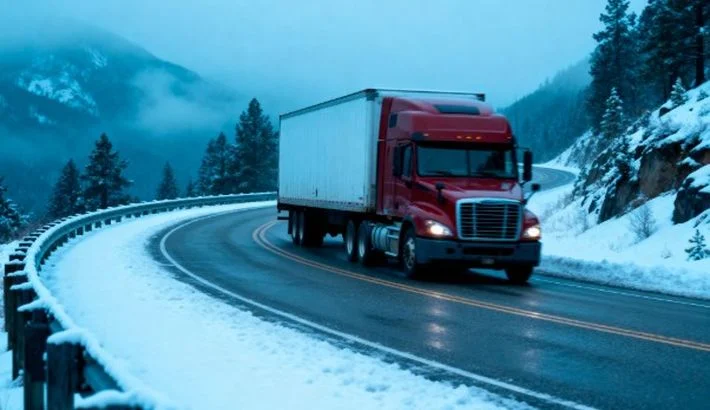
Shipping to Alaska in 2026


 To share
Planning to expand your business is truly a key milestone in your development, one that will determine your future growth. It’s what pushes you to expand your horizons. And your logistics team faces major geographical obstacles.
By comparison, shipping orders across forty-eight contiguous states relies on the efficiency of highway and rail corridors. If you’re looking to open up a niche category, you’ll need to be more careful. The northern route is one of the most challenging and least explored, but it can offer growth potential for businesses that prepare their logistics properly.
Shipping to Alaska represents access to a distinct consumer base with high purchasing power and a strong reliance on online retail. Even leading companies often overlook the region. They believe that long-haul shipping to non-contiguous territories is too complex to manage. And in a sense, it is.
The main obstacle lies in the peculiarities of the geographical location. The region is almost completely separated from the mainland U.S. by thousands of miles of terrain and complex transport routes. This physical isolation means you can’t simply ship your order directly to your customer. This multi-tiered shipping structure creates additional overhead, which increases lead times and overall pricing.
If you’re looking to expand into a new consumer market in Alaska, your operations team needs to understand the non-contiguous US supply chain. By understanding the ins and outs, your brand can gain that much-needed competitive advantage and turn a complex logistical conundrum into a direct route to revenue. Let’s take a look at how to open the door to Alaska shipping without losing capital.
Why is Shipping to Alaska So Different?
To understand how shipping to Alaska works, businesses need to first pay attention to the region's infrastructure and the vast expanse of its territory. Most of the regional territories are almost completely cut off from any usual road systems, which makes them inaccessible to standard trucks.
Due to the lack of roads, carriers have to look for alternative delivery routes. Accordingly, a package sent to Alaska does not travel along the usual highway route. It can move by air, sea, and land vehicles.
Such an intermodal network imposes restrictions and increases the overall costs of your business. This includes surcharges for remote delivery for standard procedures. Most services that combine multiple delivery methods may cost more, making operations in this region extremely difficult to plan, even for large businesses.
In addition, the overall delivery time varies depending on seasonal storms and extremely low temperatures, which also have an impact on business development. To improve customer service, your team needs to understand the fundamentals of shipping goods through such a challenging region. Here are some structural contrasts to consider:
- extreme environmental vulnerability — sub-zero winter temperatures and severe blizzards block popular routes, causing delays in delivery;
- complex multi-layer handling — goods pass through many different vehicles throughout the journey, which can result in significant damage;
- high long-distance shipping fees — national carriers charge high fees to cover fuel and labor costs in the most isolated and remote regions;
- sparse local infrastructure — the lack of highways means fewer local sorting centers may be available, which also affects the overall cost of delivery services.
When planning a delivery to Alaska, you need to consider all of the variables listed. Although the territory is technically part of the United States, the long distance creates additional costs. Your team must adhere to certain requirements. Special attention should be paid to the quality of packaging materials. Reliable labeling and accurate weight measurement are essential for the correct distribution of cargo along delivery lines.
If you do not prepare for the Alaska shipping customs-like process in advance, including carrier documentation, route requirements, and remote-delivery rules, you risk encountering additional operating costs. The smooth development of your business in a vast, uncharted territory depends on the effectiveness of your packaging and logistics strategy.
Carrier Breakdown for Alaska Shipments
There are a variety of options for shipping to Alaska, which opens up a wide range of opportunities for your business. Each major transportation provider has a unique developed infrastructure that takes into account all the landscape and weather features. This is what affects the overall delivery costs and speed according to the chosen service model.
For example, standard national postal services can be a practical option for light, small consumer packages. The chosen carrier works according to a unified standard, delivering parcels even to the most remote ZIP codes without additional fees typical of commercial organizations. For sending cosmetics, small accessories, and compact shipments, postal networks are well-suited, allowing businesses to reduce operating costs.
For heavy commercial shipments, different rules apply. Here you have to choose between air and sea freight solutions. Air transit is highly efficient, allowing certain products to move between major hubs faster than other methods. At the same time, the cost of such services and strict carrier restrictions on the types of goods cause certain difficulties in the daily work of brands.
Sea barges or ocean freight solutions are more affordable. This option is already suitable for transporting various wholesale and retail goods. You will get a lower shipping to Alaska cost for larger planned shipments, which simplifies budget planning. You can learn more about the features of different carrier categories used for Alaska shipments.
| Logistics Transportation Mode | Ideal Package Profile & Weight Range | Primary Strengths & Operational Features |
|---|---|---|
| National Postal Networks (for example, USPS) | Best for lightweight consumer parcels (0 to 20 lbs). | Bypasses standard remote surcharges, reaches rural PO boxes, and offers highly affordable standard shipping. |
| Commercial Air Freight Services | Ideal for urgent, high-value, or time-sensitive retail goods. | Delivers unmatched transit speeds to major hubs, but carries expensive fuel surcharges and strict weight limits. |
| Ocean Marine & Barge Services | Designed for bulk pallets, heavy machinery, or massive volume restocks. | Provides the lowest possible cost per pound for large shipments, but requires much longer planning timelines. |
In many cases, it is more profitable to use the services of several transportation options at once. Thus, you can optimize costs during peak season and organize fast last-mile delivery of products to the end client.
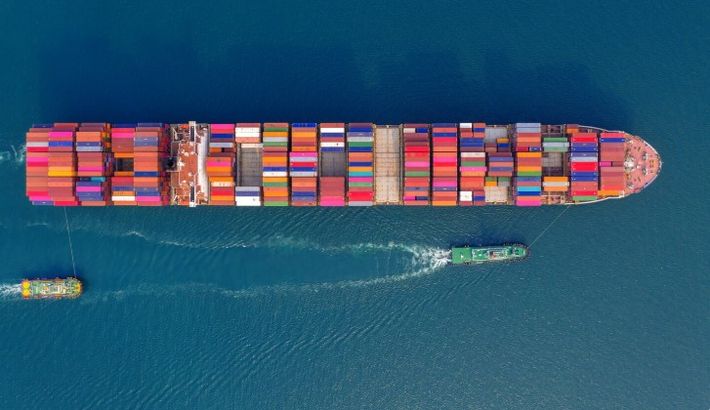
For example, a prudent seller can use sea transport to place a supply of goods in regional distribution centers before the start of the shopping season. At the height of orders, the company can quickly redirect orders to a local express delivery network. A multi-level delivery system provides flexibility in daily operations and optimizes the budget, minimizing additional costs. To remain competitive, you need to think through each stage of logistics.
How to Reduce Your Shipping Costs to Alaska?
It’s important to learn how to control your overall shipping costs to Alaska. To do this, you need to develop a strategic approach to packaging, product consolidation, and regional inventory management. Online brands often forget about the specifics of the North, so they spend too much money on what they could save. They use large boxes, choose expensive shipping methods, and misallocate resources.
You can reduce additional costs if you approach the issue sensibly. Your fulfillment team should implement strict zonal packaging rules. They should choose compact packaging that fits exclusively the dimensions of the goods being shipped. By minimizing the volume of packages, you will already save on weight charges. Even a small revision can significantly affect your business and improve your overall approach to cost planning.
Another strategy that will help reduce logistics costs is to use regional methods of parcel consolidation through an internal freight forwarder. You don’t need to ship hundreds of small packages separately and spend a lot of money each time.
A pre-prepared pallet travels across the continent at attractive bulk freight rates and then reaches the sorting center. Such a model reduces the cost of processing each individual order. To implement such measures, your management team should take a few simple steps:
- Implement strict box size regulations. Check the packaging line. Make sure that the smallest possible box is used for each order.
- Use regional cargo consolidation. Combine multiple orders into one. Use the services of low-cost ocean shipping lines to reduce the cost per package.
- Create regional inventory centers close to Anchorage or Fairbanks. Place high-demand products immediately in regional centers, which completely minimizes transit fees.
- Remove unnecessary external packaging. If you remove unnecessary packaging, you can save on oversize rates.
- Implement Alaska-specific shipping policies. Give your customers the ability to choose their own shipping options. This flexibility increases loyalty and service quality, so they are more likely to return.
By implementing all the necessary steps, you will improve the level of service in Alaska and ensure stable deliveries under any conditions. Your business will be able to use this advantage to attract new customers. At the same time, you can be sure that the cost of the tariff will not increase without warning.
A predictable cost structure is important for long-term cost planning. Your marketing team will be able to develop targeted regional promotions that affect long-term customer trust and increase brand loyalty.
How Meest Solves the Alaska Shipping Puzzle?
Managing complex multi-level logistics for such a complex region can be difficult on your own. Even a large-scale, growing brand can face significant difficulties. That is why it is important to establish cooperation with a global logistics expert like Meest. Such a service reduces operating costs and price barriers that were an obstacle to opening a new sales territory. A fully integrated order fulfillment system helps in planning further steps.
A well-thought-out infrastructure helps process key details and provides a comprehensive approach for any niche. Experience in cross-border delivery also plays an important role. A developed transport network is important for those companies that plan to establish more reliable deliveries to any settlement in Alaska.
One of the key advantages of working with professionals is flexible and affordable solutions for the consolidation of LTL cargo and wholesale transportation, adapted for digital brands. You do not need to independently calculate the rates of individual carriers or spend additional resources on delivery. A consolidated order delivery system helps businesses plan for further development in the region and promotional offers for buyers.
The joint volume model also reduces initial capital requirements. That is why the service is available even to small companies that have just been founded but are looking for sales markets. Your order fulfillment team will be able to quickly generate cargo offers, promptly processing customer requests.
Meest provides access to a global network of order fulfillment, warehousing, and customs support. You do not have to plan logistics processes yourself or hire additional employees. A team of logistics specialists helps control the documentation, tracking data, and carriers in real time.
This approach can reduce the risk of delays at the border and significant expenses. It is thanks to this strategy that you can focus on what is really important. Improve product quality and expand the audience to ensure successful scaling.
Conclusion: Reach the Alaskan Market with Confidence
To master shipping to a non-contiguous US market, you need to approach this issue as responsibly as possible. Careful planning at the initial stage opens up great savings in the long term, even in unforeseen circumstances.
By optimizing the size of the package, using inexpensive service lines, and developing appropriate documentation, you will avoid delays at the terminal. The initial stage is always difficult. Planning multi-layer intermodal transportation requires a complete restructuring of logistics. But the advantages in further development are undeniable.
You don’t need to go through this process yourself. To do this, you can choose a reliable freight forwarder who has experience in the market. Cooperation with an expert like Meest gives access to the full range of planning shipping to Alaska at a high level with confidence. Specialists take on much hard work.
Businesses do not need to independently study customs clearance issues or coordinate the actions of carriers. Consistently moving into new territory takes time, but careful preparation and planning of each stage allows you to achieve stronger results. You can increase profits and gain new loyal customers.
To share
Our news


Meest and Self Reliance Financial Federal Credit Union (SRFFCU) Announce New Partnership
Together, we are creating more opportunities for the Ukrainian community in the United States
Important Customs Requirements Update for Shipments to Armenia
We recommend reviewing these requirements before creating your shipment to help avoid possible delays.
What Is a Bill of Lading, and Why Do You Need It?
A bill of lading is one of the central shipping records used in cargo transportation.

What Is a Packing List for Shipping and How to Prepare One?
A clear packing list makes it easier for all parties involved to understand what they are transporting.
What Is Freight Forwarding, and How Does It Work?
The exact setup depends on many factors we’ll cover.
Fulfillment Center vs. Warehouse: What’s the Difference?
The right choice depends on several factors we will discuss in more detail.
How Much Does It Cost to Ship a Car Overseas From the USA?
This process is rarely priced with one flat fee.



 Domestic