



How to Calculate Shipping Costs?


 To share
Shipping costs are a serious factor for many businesses. They directly affect profit margins, pricing strategies, and customer satisfaction. There is also another side to consider. The price often determines whether an order feels affordable and whether the final checkout will be done or customers will go to another website searching for a better international shipping option. Thus, understanding how to calculate shipping costs is essential for both sides.
However, the calculations aren’t straightforward. There is a wide range of factors that influence the final shipping fees. If you are not aware of them and just rely on what the carrier writes in a quote, you risk undercharging and losing money.
So, we have created a practical guide for e-commerce sellers, retailers, and anyone who wants to understand how to determine shipping costs. After reading it, you will know how to estimate expenses for your next order.
The Core Factors: What Actually Determines Your Shipping Cost?
The first thing to remember is that shipping costs are never fixed. They depend on several variables that carriers use to calculate accurate rates. However, it is also important to know that most factors are typical of many providers, but each company can have certain criteria that others do not take into account. Still, we will focus mainly on the common ones below.
Weight and Dimensional Size
The most obvious factor is weight. Carriers charge based on either actual or dimensional weight. It is important to know that the higher value is always taken into consideration. So, a light but oversized product may cost more to ship than a compact, heavier item.
The reason is very simple — a bulky item takes up more space in transit. For example, a large box of pillows may be light, but it will still cost more because of its size.
Carrier and Rate Differences
Each carrier (including FedEx, USPS, DHL, or Meest) has its own rates and service rules. USPS often has affordable options for small domestic orders, whereas Meest or FedExmight provide faster international delivery.
It is best for businesses to compare carriers. This straightforward step gives them an opportunity to balance speed, reliability, and cost. Check whether pickup, insurance, signature confirmation, or residential delivery are included before comparing two offers from different providers across platforms.
Delivery Zones
Domestic shipments are divided into zones based on distance from the origin. The farther the package travels, the higher the charge. With international shipping, there is an additional layer that makes calculations even more complex. There are:
-
customs duties;
-
longer transit times;
-
additional handling.
They increase the overall cost, so these aspects cannot be ignored during the calculations. Thus, a shipment from New York to Los Angeles will be priced differently from the same package sent from New York to London, even if the weight is identical.
Type of Package and Item Thresholds
The type of package and its characteristics can also alter the price. Fragile, oversized, or heavy products often require special handling or packaging. This translates into increased fees. Furthermore, shipping companies can have thresholds for certain items. So, if a package exceeds a certain size or weight, it moves into a higher pricing category. When you know those limits, you can adjust the size of those borderline packages.
Surcharges and Fees
Besides base rates, carriers also charge other fees. These include fuel surcharges, weekend service charges, and handling fees, which can significantly increase the overall cost. For businesses, these added expenses must be incorporated into pricing strategies to avoid underestimating the true expense.
Three Ways to Calculate Shipping Costs: From Slow to Instant
Learning how to estimate shipping costs can feel overwhelming, and it certainly is, given that different carriers use varying formulas and surcharges. For now, there are three main approaches that businesses and individuals rely on to find out the delivery price. You can easily pick the one that suits you most, and the system supports both manual and automated solutions. Each method has its own pros and cons, and knowing them will help you choose the best option for your orders.
Method 1: The Manual Approach (At a Carrier’s Store)
This is probably the most traditional method. Customers wondering how much does shipping cost can go to a physical location of a carrier, like a USPS post office or a Meest branch. The employees will scale your package, measure the dimensions, and give you an instant rate quote. Such calculations are accurate because the carrier sets the charge using official equipment and applies any necessary surcharges immediately.
For example, if you bring a 3 lb product to USPS, the postal worker will determine whether it qualifies for Ground Advantage or Priority Mail, then give you the exact pricing. Similarly, FedEx staff can advise whether your delivery should go via Ground, 2Day, or Overnight service.
Unfortunately, it is not without downsides. The main one is time. Waiting in line, filling out forms, and asking for assistance can be a tedious affair. For e-commerce sellers who have multiple orders, this way is not viable. But for occasional shippers or customers who want personal guidance, this is still a reliable option.
Method 2: The Tedious Way (On Carrier Websites)
Most carriers now have online calculators. USPS, FedEx, UPS, and Meest allow you to enter weight, dimensions, origin, and destination to get a shipping estimate. This method is easier than going to a store, but it can be time-consuming and less convenient.
Each carrier has its own interface, which means you have to enter the same data again and again for every order. For e-commerce businesses shipping dozens of products every day, this becomes inefficient. Also, the results often differ based on the zone, service level, and whether the delivery is residential or commercial.
For example, a 10 lb package can cost $20 to ship with FedEx Ground, $40 with FedEx 2Day, and $70 with FedEx Overnight. USPS may provide Priority Mail at $19, and DHL might offer $60 for international express. These differences are why it’s important to compare carriers, but doing so manually across multiple sites is inconvenient.
Transparency is another drawback that you may face. Some websites display base rates but show surcharges only at checkout. Customers may see a lower initial fee and choose a carrier because of this. However, they can be frustrated at checkout seeing fuel or handling charges.
Method 3: The Smart & Instant Way (Using an Online Shipping Calculator)
The most efficient way is to use a comprehensive online calculator that combines all the variables into one instant quote. Tools such as Meest’s International Shipping Calculator allow you to input package details once and get an accurate price right away. This approach saves time, minimizes errors, and promotes transparency.
Rather than navigating multiple carrier sites, businesses can view the complete rate, including surcharges, in a matter of seconds. For ecommerce sellers, it’s best to include such calculators in the checkout process so customers can see the exact charges before they place an order, avoiding undercharging and establishing trust.
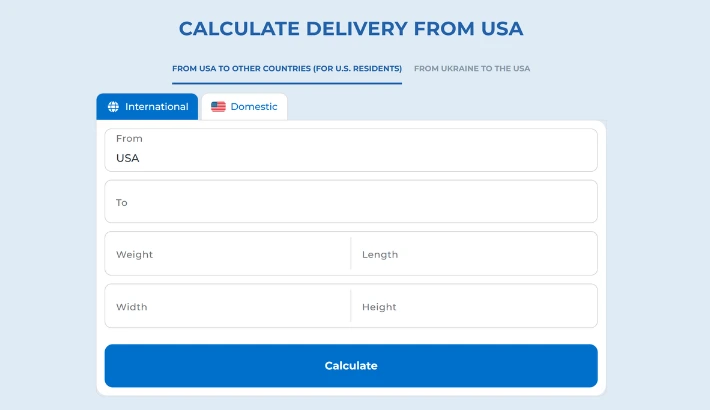
When you enter a 5 lb product for Poland into Meest’s calculator, you receive an immediate total cost, inclusive of customs and residential delivery fees. This same tool can also compare economy to priority, enabling businesses to find the right balance of speed and budget.
This approach is especially useful for long-distance cross-border deliveries. Customers often ask, “How much does international shipping cost?” and manual methods rarely give clear answers.
Why the Smart Way Wins
Manual and website methods have their place, but the smart, instant approach is the most pragmatic for modern e-commerce. It reduces administrative work, improves pricing accuracy, and enhances the customer experience. Automating calculations allows companies to focus on growth rather than logistics. An instant shipping calculator helps businesses accurately determine rates across borders, set realistic thresholds for free delivery, and adjust their overall strategy.
Ultimately, calculating shipping costs depends on which method you choose. Occasional senders may be able to use the manual way, while those looking for official quotes can get details from carrier websites, although it takes effort. For businesses managing multiple orders, the smart way — using an integrated calculator — is the clear winner.
Getting an Instant, Accurate Quote with Meest
If you’re searching for the easiest way to find out your shipping cost, there’s no better option than using a dedicated tool like Meest’s International Shipping Calculator. Rather than wasting time browsing carrier sites or visiting service desks, this tool instantly provides you with clear pricing based on your package, destination, and chosen delivery method.
Our calculator simplifies the process by combining all the key variables, namely weight, size, zone, and potential surcharges. So, after adding the information about your parcel, you get a clear quote. Businesses and individual customers can see the full rate, including handling and customs, before confirming an order. This reduces the risk of unexpected costs or hidden fees and helps e-commerce sellers set accurate checkout charges for their clients.
Here is a step-by-step guide on how to use the calculator. The process is simple if you prepare package details in advance:
-
Select whether you are shipping from the US to another country or sending a parcel back to the United States. The “US to another country” option is available to US residents only. If it is a domestic delivery, you need to click on the respective button on the calculator.
-
For international delivery, you need to select the “From / To” countries. If you want to calculate a domestic route, indicate the departure and destination cities.
-
Add the information about the weight, height, width, and length of your parcel.
-
Click the “Calculate” button.
After the estimates are done, you will see possible shipment options and approximate prices. When you select a suitable service variant, you can continue to order and create labels. Registration is needed for this part.
Also, note that as soon as you indicate the size and measurements of your parcel, the system shows you whether the actual or volumetric weight will be taken for calculations. This information allows you to choose the right packing strategy so as not to overpay.
Pro Tips: How to Actively Reduce Your Shipping Costs
The piece of advice is just one of the tips that can help you to reduce the cost. There are many more. They can allow individual customers to save their money and businesses to protect margins while keeping the user experience positive. Here are other pro tips worth applying for your next shipment.
Consolidate Orders into Fewer Packages
Combining multiple orders into one package. This can lower the overall charges. Instead of sending three separate shipments, you have just one. In this case, you can reduce surcharges. For e-commerce, where customers buy several items at once, this approach is practical.
Negotiate Carrier Rates or Use Commercial Pricing
Regular shippers can negotiate better rates with carriers or access commercial pricing tiers. It is worth checking this option, even if you think your order volume is too low for such terms. Even small businesses benefit from platforms that pool volume to secure discounts. This depends more on choosing the right provider than on shipment frequency.
Automate Checkout with Accurate Calculators
Integrating shipping calculators into checkout ensures customers see precise charges. This avoids undercharging and builds trust through transparent pricing. Automated tools also save time and reduce manual entry errors, improving the overall e-commerce workflow.
Conclusion
Shipping costs are still an essential part of modern commerce. It is a complex subject, depending on many factors: weight, size, carrier rates, delivery zones, and additional fees. Now that you understand all these elements, your calculations will be more accurate.
Yet, unexpected charges can still appear depending on the carrier that you choose. Always select the one that offers transparent rates and no hidden costs. Moreover, a leading shipping company also provides smart tools that make the calculation process easier. With Meest, you can estimate the cost using an automated calculator within minutes!
To share
Our news


Meest and Self Reliance Financial Federal Credit Union (SRFFCU) Announce New Partnership
Together, we are creating more opportunities for the Ukrainian community in the United States

Important Customs Requirements Update for Shipments to Armenia
We recommend reviewing these requirements before creating your shipment to help avoid possible delays.

What Is a Bill of Lading, and Why Do You Need It?
A bill of lading is one of the central shipping records used in cargo transportation.

What Is a Packing List for Shipping and How to Prepare One?
A clear packing list makes it easier for all parties involved to understand what they are transporting.

What Is Freight Forwarding, and How Does It Work?
The exact setup depends on many factors we’ll cover.

Fulfillment Center vs. Warehouse: What’s the Difference?
The right choice depends on several factors we will discuss in more detail.

How Much Does It Cost to Ship a Car Overseas From the USA?
This process is rarely priced with one flat fee.



 Domestic