



The Best E-Commerce Shipping Strategies for Black Friday & Cyber Monday


 To share
Every November, the same words bombard shoppers' inboxes: discounts and sales. But behind the pretty banners and enticing prices lies a far-from-festive reality — thousands of packages, overloaded warehouses, and couriers who can't quite deliver everything on time. Logistics is what decides whether customers remember Black Friday as a pleasant shopping experience or a lost-parcel story.
Many brands spend months developing promotions and creative ideas, but they forget that even the most compelling discount is meaningless if the package arrives two weeks late. Shoppers rarely blame the carrier. In their eyes, the store they ordered from is to blame. A well-thought-out Black Friday shipping strategy isn't a secondary detail; it's the foundation of the entire sale. Develop it well before the promotions start.
Prepare Your E-Commerce Shipping Strategy Before Black Friday
Black Friday e-commerce and Cyber Monday shipping aren't just two days of increased demand; they're a true stress test for the entire logistics chain. Order volumes increase exponentially, courier warehouses fill faster than usual, and carrier capacity — the throughput capacity of carriers — becomes the main limiting factor.
If a business doesn't prepare in advance, even the most loyal customers risk delays and delivery confusion. Customer support faces a veritable avalanche of identical questions about "Where's my order"?
The problem is that most stores plan their marketing months and logistics in the final week. As a result, warehouses and delivery services are unprepared for a sharp increase in orders, even though the surge was entirely predictable. Therefore, preparation should begin several weeks in advance, not just a couple of days before the promotions begin.
Forecasting order volumes, checking packaging inventory, and coordinating delivery deadlines with carriers in advance help avoid chaos during the busiest period. It's also important to test all technical processes in advance — from ordering on the website to printing labels — to avoid technical glitches during peak sales season.
Below are the basic steps to start any e-commerce shipping strategy before peak season:
- Forecast the expected order volume.
- Replenish packaging supplies.
- Check delivery times with carriers.
- Compare available shipping options.
- Prepare staff for a surge in orders.
- Test the packaging and labeling system.
Each of these steps seems trivial on its own. Together, they form a resilient system that can handle peak-season shipping without interruption. The sooner a business goes through this checklist, the smoother the sales days themselves will be, and the team will be able to respond to peak demand without panic or warehouse scrambles.
Should You Offer Free Shipping on Black Friday?
Free shipping is one of the most convincing arguments for a buyer who hesitates at the "place an order" button. Black Friday free shipping can significantly increase conversions and reduce cart abandonment, especially when competitors offer similar product discounts but stay silent about delivery costs.
For many buyers, delivery cost becomes the deciding factor at the last minute. Use it as a tool, not a forced concession.
Free delivery does not have to be unconditional and the same for all orders. Several practical models allow you to maintain control over costs and at the same time remain attractive to the buyer. Here they are:
- set a threshold for the minimum order amount;
- offer free delivery for a limited time;
- limit the promotion to certain areas;
- apply free shipping to selected products;
- combine free delivery with a loyalty program;
- add a condition on the payment method.
Before launching any of these schemes, calculate the economics honestly: the cost of delivery, the product margin, and the expected growth of the average check must add up to a positive result. Otherwise, an attractive offer will turn into a loss after the first wave of orders. Be especially careful with free delivery on international orders — logistics costs are higher there, and without calculation, the promotion can eat up all the profit from the sale.
You can also save by planning ahead to reduce shipping costs — for example, by consolidating shipments or choosing a more favorable carrier tariff. This calculation isn't a formality. It's insurance against unpleasant surprises in post-sale reports.
How to Reduce Black Friday Shipping Delays
Delays during peak season rarely happen for one reason. Usually it is a combination of factors, such as record volumes of orders, limited carrier capacity, bottlenecks at the order fulfillment stage, shortage of goods in stock, and shipments being processed too late.
Each of these factors is tolerable individually, but together they turn into a chain reaction that extends delivery times by days and sometimes weeks. This is especially true when a store works with several warehouses at the same time.
There is also a less obvious reason for the delays: the buyers themselves. During peak sales, people more often make address mistakes, forget to indicate an apartment or entrance, and support teams waste time on clarifications instead of processing new orders. A simple, clear order form reduces these errors before the package even reaches the warehouse.
It is impossible to eliminate Black Friday shipping delays completely — a season is a season. But it is quite possible to minimize their influence. To do this, you need to build processes in advance and manage customer expectations honestly and not with promises of "delivery on time," which are difficult to fulfill during peak load. Here are practical tips to help reduce risks:
- start preparing earlier than usual;
- process orders as quickly as possible;
- prepare packaging materials in advance;
- offer customers several delivery options;
- communicate realistic delivery times;
- track shipments and statuses.
The main goal is not to guarantee the impossible, but to manage expectations honestly. A buyer who is warned about a possible delay reacts much more calmly than one who learns about the problem after the fact from a support letter.
Plan Black Friday International Shipping in Advance
If a business sells beyond domestic sales, the task becomes significantly more complex. In this case, Black Friday international shipping adds to the usual peak loads: longer transit times, customs clearance, duties and taxes, and different document requirements by destination country. What works for domestic orders can get stuck at the border if the documents are inaccurate or the declaration contains incomplete information about the package's contents.
Customs documentation errors are one of the most common reasons. They cause international parcels to get stuck during peak season, when customs services are already busier than usual.
To avoid headaches from international orders, it's worth checking the accuracy of customs information for each destination in advance and honestly communicating estimated international delivery times to customers. The choice of shipping method also matters. In some places, speed matters more, while in others, it's wiser to save money and choose a slower but cheaper option, especially if the buyer doesn't expect to receive their order immediately.
Here, a service like international shipping from the USA via Meest comes in handy again. The company ships to over 170 countries and offers a variety of delivery options, including options with and without duties. This simplifies planning international orders during peak season.
Before launching a promotion for international buyers, it's worth calculating international shipping costs in advance. Otherwise, an attractive discount can quietly eat up all your margins on long-distance routes. A difference of a few dollars per package or an extra day of transit seems trivial until you're dealing with thousands of orders simultaneously.
Keep Customers Informed After Their Black Friday Orders Ship
A completed and paid order is only the halfway point, not the final destination. During peak season, package tracking and proactive communication with buyers become a necessity, not a nice-to-have bonus. The number of orders is growing, and with it, the number of "where is my package" questions, especially if delivery takes longer than usual.
Customers need to receive a tracking number immediately after shipment, understand a realistic delivery window, and be aware of potential delays in advance, rather than calling support in a panic. The clearer and simpler the order status updates, the less workload there is for customer support and the greater the store's overall trust.
A good practice is to send not one notification at the time of shipment but several short updates at key stages of the package's journey: this creates a sense of control even when delivery takes slightly longer than usual. Returns are also worth keeping an eye on: higher order volumes on Black Friday and Cyber Monday almost always mean higher return volumes.
Below are the basic elements of communication that should be established after an order has shipped:
- send the tracking number immediately;
- explain the expected delivery window;
- warn about delays in advance;
- simplify the return process;
- offer convenient support channels;
- send delivery status notifications.
A service like the Meest tracking page allows customers to check the status of their packages at any time. Users don't have to wait for a response from support. These technologies reduce the team's workload during peak inquiries and increase trust in the store, even during times of higher logistics pressure.
Conclusion
A successful Black Friday and Cyber Monday shipping strategy is built not on luck, but on preparation. Planning, realistic delivery times, cost control, reliable international logistics, and clear customer communication are the five pillars that ensure a smooth peak season without warehouse chaos or a flood of customer support complaints.
Tools, like the shipping calculator and tracking service Meest, help you calculate shipping costs and delivery times in advance. Our extensive US shipping network makes it easier to reach international customers, even during the busiest time of year. The sooner a business begins preparing, the more confident it will be during the biggest sales season of the year, and the more confident both its team and customers will be.
To share
Our news

Meest and Self Reliance Financial Federal Credit Union (SRFFCU) Announce New Partnership
Together, we are creating more opportunities for the Ukrainian community in the United States
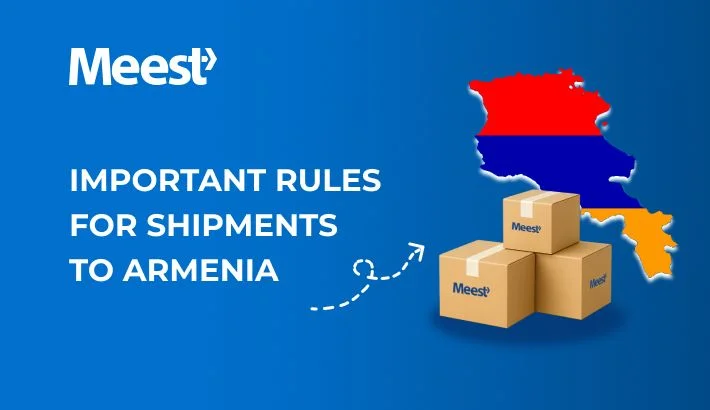
Important Customs Requirements Update for Shipments to Armenia
We recommend reviewing these requirements before creating your shipment to help avoid possible delays.
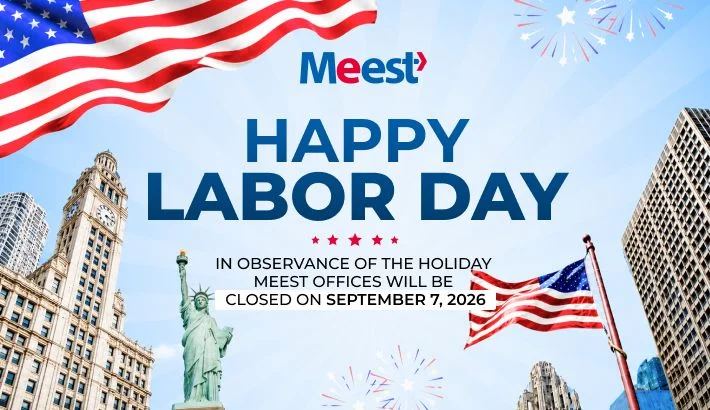
Happy Labor Day!
Wishing you and your loved ones a safe, relaxing, and enjoyable Labor Day.


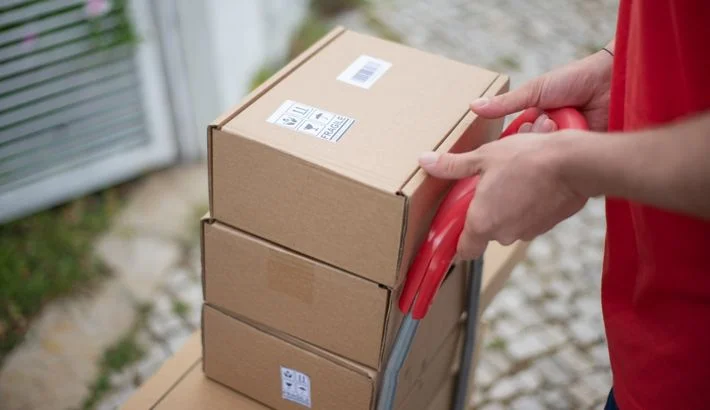

How to Address a Package for Domestic and International Shipping
Let's explore this together.
Understanding CBM in Shipping: Your Guide to Cubic Meters in Logistics
You'll avoid surprise fees and keep the whole process simple.



 Domestic