


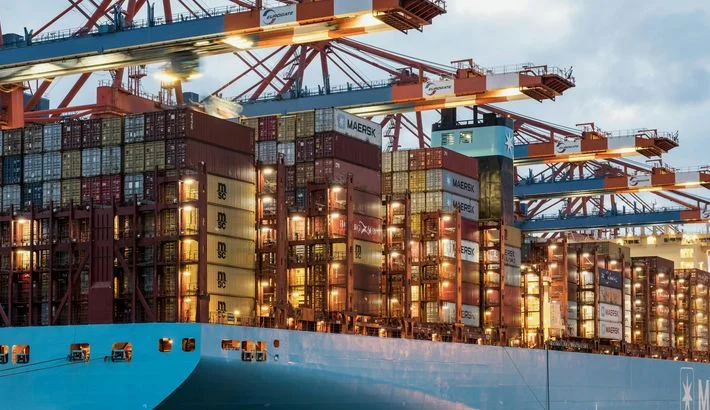
LCL vs. FCL: Which Shipping Method is Right for Your Growing Business?


 To share
The world of international trade is undergoing constant transformation. For growing businesses, choosing the right shipping method becomes a strategic decision. Entrepreneurs inevitably face the issue of optimizing logistics costs and lead times when scaling.
As production volumes increase, standard mail parcels become less cost-effective, making ocean cargo an excellent alternative. This option remains the most popular and cost-effective way to transport goods over long distances. However, business owners face a dilemma: rent a full container or pay only for the space it occupies.
The option you pick has a direct impact on product margins and overall supply chain performance. Miscalculations can lead to unnecessary expenses. They can also lead to delivery delays. These are both critical for a young company.
You need to understand all the nuances of choosing between partial and full container loads. It helps you understand how to save money and protect your goods. When you understand logistics, delivery stops being a headache and becomes a strength.
The market today demands flexibility and the ability to quickly adapt to changes in supply and demand. To compete successfully, it's essential to understand the terminology and technical aspects of international shipping.
The choice of transportation method depends on the current cargo volume, overall budget, and desired speed. The fragility of your items and your shipping schedule are just as important.
A thorough analysis of these parameters helps you build a reliable supply chain and avoid unexpected issues at customs. It's important to remember that logistics isn't just moving boxes; it's a complex resource management process.
Attention to detail is required at every stage, from the sender's warehouse to the recipient's door. Below is an in-depth look at the first delivery option, which is often ideal for small businesses.
Deep Dive: What is LCL (Less than Container Load) Shipping?
The LCL mode is useful when a batch of goods isn't large enough to fill a standard shipping container. LCL stands for "less than container load."
By combining shipments from multiple shippers into a single container, the entry barrier for international imports and exports is significantly lowered. This operating model opens up the global market to small startups and sole proprietors.
The process begins at a container freight station (CFS), a dedicated warehouse. Small parcels from different customers are consolidated into a single case.
This approach uses cubic meters (CBM) to calculate costs. You only pay for the space your items actually take up, which is a big advantage when carrying small loads. At the final destination port, workers separate the consignment for onward delivery. This process is called deconsolidation.
LCL comes with its own quirks, so consider them before scheduling transportation. Because your goods travel with other cargo, it is essential to carefully prepare documents and packaging. An experienced freight forwarder will always advise on how to properly prepare a shipment for consolidation. Here are the main advantages of using the LCL method for business:
- minimization costs;
- the ability to ship small volumes;
- improved inventory management;
- preservation of the company's working capital;
- flexibility in supply planning;
- access to international markets.
Despite the obvious savings, it's worth considering that transit time for consolidated shipments is usually higher than for direct delivery. Delays occur because goods wait for a full load and undergo additional processing at consolidation (consolidated shipping) warehouses.
Nevertheless, for many companies, the difference between FCL and LCL lies precisely in the ability to maintain a stable product range without incurring large inventory costs. Proper use of LCL allows businesses to grow steadily and confidently.
Legal formalities for such transportation are also important. The bill of lading (BOL) stands as the main document. In the case of consolidated deliveries, a "house bill of lading" is issued. The document proves that you own a specific portion of the cargo in a shared unit.
Senders can rely on full transparency and protection from start to finish. Understanding these processes helps better control import/export operations and avoid delays.
Deep Dive: What is FCL (Full Container Load) Shipping?
When a business outgrows the small-scale shipment stage, the FCL mode becomes the preferred option. A Full Container Load allows a single shipper to use the entire space. Unlike consolidated cargo, your goods are the sole "owner" of the space. The volume doesn't have to be full. You pay for the entire unit, whether it's 10% or 100% full.
Using Full Container Load gives the shipper complete control over loading and stowage. The main types of equipment used here are standard 20-foot and 40-foot containers, as well as 40-foot high-cube options.
Logistics teams use TEUs (Twenty-foot Equivalent Units) to maintain consistent capacity calculations across ships and ports. For large companies, this system is the gold standard. It ensures predictability and reliability in supply chain management.
Security is significantly higher this way. The container is sealed immediately after loading at the shipper's warehouse. You reduce the risk of damage during port handling by keeping the package in place until it reaches the final recipient. This matters a lot for electronics, furniture, and industrial equipment. Here are the main reasons why companies choose this shipping method:
- maximum cargo security during transportation;
- high processing speed at ports;
- no contact with other people's parcels;
- simplified customs clearance procedure;
- ability to transport oversized, heavy items;
- strict adherence to all delivery schedules.
FCL delivery speeds are typically faster because shipments do not need to pass through a Container Freight Station (CFS) for consolidation.
The container is shipped directly from the factory to the port and leaves the destination port just as quickly. This approach shortens overall time, sometimes by weeks, compared to consolidated cargo. For businesses that value time and capital turnover, such efficiency is crucial.
However, it's important to remember that FCL requires a more significant one-time investment and warehouse capacity to accommodate large volumes of products. Use this mode for large-scale purchases to ensure safety and transparency. Knowing the answer to the question "what is FCL and LCL in shipping?" allows you to switch to a more efficient model as sales grow promptly.
Head-to-Head Comparison: LCL vs. FCL at a Glance
A direct comparison is necessary to fully understand the intricacies. The key difference between the methods lies in balancing cost, speed, and volume.
LCL is more cost-effective for small volumes, while FCL becomes more profitable once a loading threshold is reached. This threshold is called the break-even point. Calculating it is a key task for any logistics professional. The correct choice of way directly impacts the final shipping quote issued by the carrier.
The difference is also evident in the pricing mode. With LCL, you pay by the cubic meter, while with FCL, you pay a flat rate for the entire container. This creates an interesting dynamic. Sometimes, carrying a half-empty 20-foot container as FCL is cheaper than paying for a large volume using the LCL system. In logistics, this is called volume-based cost optimization.
| Parameter | LCL (Partial Load) | FCL (Full Load) |
|---|---|---|
| Payment | Volume (CBM) | Per container |
| Speed | Slower (consolidation needed) | Faster (direct route) |
| Risks | Higher due to extra handling | Minimal (sealed case) |
| Documents | Several Bills of Lading per box | One Bill of Lading per container |
Many entrepreneurs wonder what the main difference is when it comes to safety.
Your cargo shares space with other companies' items in LCL, some of which may be heavy, smelly, or sharp. With FCL, you decide how to arrange your pallets to prevent them from shifting during transit. Sea freight becomes more predictable and safer for fragile items.
Furthermore, inventory management becomes easier when working with full containers. You receive goods in predictable, large batches. Better planning of marketing campaigns and inventory replenishment becomes possible.
LCL offers greater supply chain flexibility for testing new products, but FCL offers greater stability. Choosing between the two is always a tradeoff between cost savings and efficiency.
Making the Right Choice: A Decision Framework for Your Business
Choosing between two ways shouldn't be a guessing game or based on intuition. For a systematic business, it's important to rely on specific figures and the company's long-term strategic goals.
The main difference between LCL and FCL shipment often comes down to the volume of the shipment. If your cargo exceeds 13–15 cubic meters, renting a full container is usually more cost-effective. However, volume is just the tip of the iceberg in the complex process of logistics decision-making.
It's also necessary to consider the specifics of the goods, their value, and the requirements for open-sea transportation. For example, expensive electronics or fragile decor require maximum isolation from external factors and other cargo. A full container load can be the best choice, even if you don't use all the space. Here are key checkpoints that will help a manager make the right decision:
- accurate calculation of the volume in cubic meters;
- total cost of the entire shipment;
- criticality of delivery times to the warehouse;
- budget for each item;
- need for special securing inside the container;
- plans for regular inventory replenishment.
Sometimes you have to quickly replenish popular products without waiting for a large shipment. In this case, LCL ocean freight is a lifesaver. This strategy allows for shipping goods in small portions as they are ready.
This format significantly increases a company's agility and enables faster responses to market trends. On the other hand, stable sales require switching to FCL to reduce costs.
It's important to remember that FCL vs LCL isn't just a choice of packaging mode. You're also determining a supply chain management model. Experienced importers often combine these methods depending on the season, demand, and the distance to the supplier. Proper data analysis helps you find the right balance, ensuring your shipment arrives on time, your stock remains stable, and your costs don't eat into your profits.
How Meest Simplifies Your Freight Shipping Journey
In the complex world of international transportation, having a reliable partner transforms a stressful process into a smooth-running machine. Meest positions itself not just as a carrier, but as your strategic logistics partner. It knows each client's business inside out.
Support is provided at every stage. This support starts with the initial consultation. It also continues through the unloading of goods at the final warehouse. This allows entrepreneurs to focus on sales and marketing. They can entrust cargo movement to professionals.
Your Expert Logistics Partner
Meest is more than a transportation provider. It is a partner dedicated to your sustainable growth. The company's experts don't just move containers; they also offer strategic guidance. They help clients build smarter and more efficient supply chains.
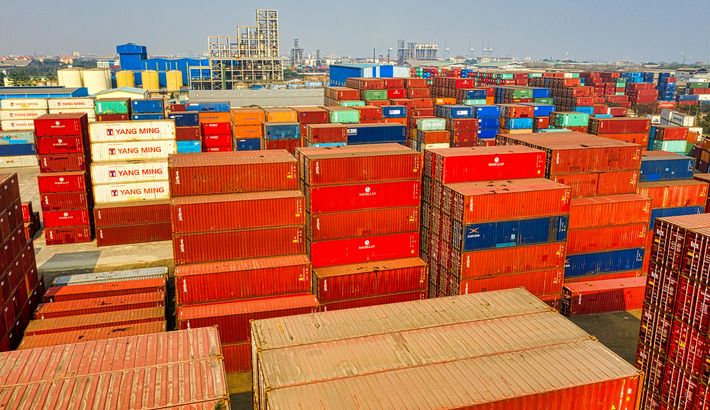
With over 36 years of experience, the team understands the pitfalls of global trade and customs regulations. These are the core values that enterprises receive when working with experts:
- deep attention to client needs;
- professional support at every stage;
- reliability and high service efficiency;
- competitive pricing for all types of shipping;
- complete transparency of the cargo delivery process;
- access to the company's global infrastructure.
Partnering with Meest enables focusing on core growth while entrusting logistics to experienced specialists. A personalized approach and flexible solutions help optimize routes, reduce delivery times, and lower operating costs.
Thanks to modern technologies and an international network of partners, clients receive stable and predictable results even in challenging global trade conditions. This makes Meest a reliable partner for long-term growth and scaling operations.
We Handle Both LCL and FCL
No matter which mode is most suitable for you today, Meest has the resources to handle any task. The company offers warehousing, consolidation, and ocean cargo support for both LCL and FCL shipments.
Your business gains the supply chain flexibility it needs, enabling you to switch between formats as your volumes grow. Clients can be assured of high-quality service regardless of the scale of their collaboration.
Meest experts help you select the optimal container format, taking into account the specifics of your cargo and seasonal demand fluctuations. Custom solutions lower costs and make shipping more reliable. This allows you to plan deliveries with confidence, focusing on expanding your market presence.
Finding Your Break-Even Point
Entrepreneurs frequently wonder whether they require a full container or if waiting is a better option. To address this, most experts analyze shipping volumes and current rates to help you find the sweet spot.
Calculating the break-even point can help you avoid paying too much for space and handling costs per item. Here's how our specialists optimize costs:
- analysis of your current shipment volume;
- comparison of rates for different methods;
- forecasting port arrival times;
- risk assessment for a specific product;
- selection of the optimal container type;
- calculation of the final cost per unit.
Entrepreneurs can use this approach to make better choices and plan logistics costs precisely. You see all costs and potential gains, making financial risks easier to manage. As a result, each shipment is optimized for efficiency and profitability.
End-to-End Service
Meest's services extend well beyond basic port logistics. They provide comprehensive turnkey solutions. The service handles cargo pickup, professional storage, customs clearance, and direct delivery to the customer.
This comprehensive support makes international trade accessible to everyone, even those who have never imported before. It makes the entire process transparent and understandable. This minimizes the likelihood of errors in documentation.
Conclusion
Selecting the optimal transportation mode is an ongoing process of adapting to the growing needs of your business, not a one-time decision. The differences between FCL and LCL give a powerful tool for cost control and better customer management.
While LCL offers a low barrier to entry and flexibility for small shipments, switching to FCL opens the door to maximum economies of scale and increased security. The right logistics strategy allows a company to do more than survive. You can successfully dominate your market by offering the best prices and lead times.
Global trade via ocean freight requires not only knowledge but also a reliable infrastructure, clear planning, and consistent operational coordination. Working with experts like Meest allows you to delegate complex technical tasks to professionals who understand the value of every detail.
From properly completing a bill of lading (BOL) to accurately calculating cubic meter (CBM) volume, every detail contributes to the overall efficiency of your commercial goals. Investments in high-quality logistics always pay off through stable supplies and end-customer loyalty.
In summary, it's worth taking another look at the benefits that a modern enterprise gains with a smart approach to transportation:
- significant reduction in overall costs;
- reliable protection of goods from damage;
- transparent and fast customs clearance;
- complete control over the supply chain;
- the ability to scale product procurement volumes;
- professional support at all stages.
The world of international business is unforgiving of miscalculations but rewards those who strive for optimization. By leveraging accumulated experience and analytical tools, any company can turn delivery into its main advantage.
Regardless of whether you ship a single pallet or dozens of containers monthly, quality of service remains a constant priority. Reliable, on-time shipments are one of the foundations of sustainable business growth in global markets.
To share
Our news

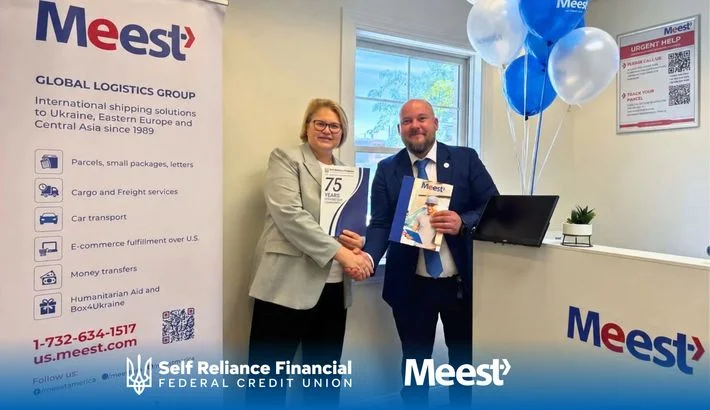
Meest and Self Reliance Financial Federal Credit Union (SRFFCU) Announce New Partnership
Together, we are creating more opportunities for the Ukrainian community in the United States
Important Customs Requirements Update for Shipments to Armenia
We recommend reviewing these requirements before creating your shipment to help avoid possible delays.
What Is a Bill of Lading, and Why Do You Need It?
A bill of lading is one of the central shipping records used in cargo transportation.

What Is a Packing List for Shipping and How to Prepare One?
A clear packing list makes it easier for all parties involved to understand what they are transporting.
What Is Freight Forwarding, and How Does It Work?
The exact setup depends on many factors we’ll cover.
Fulfillment Center vs. Warehouse: What’s the Difference?
The right choice depends on several factors we will discuss in more detail.
How Much Does It Cost to Ship a Car Overseas From the USA?
This process is rarely priced with one flat fee.



 Domestic