


How to Ship Fragile Items Without Damage


 To share
Whether it's a vintage plate or a brand-new laptop, fragile items can easily break if they aren't packed right. A single rough drop during shipping can ruin them instantly. Good packaging starts well before you hand the box over to the driver.
The good news? Your stuff can easily get there in one piece. You need a few basic packing tricks, the right shipping option, and a tracking number. Below is a step-by-step breakdown of how to do this correctly, whether it's a package across town or international shipping from the USA to another country.
At first glance, preparing fragile items may seem like a small detail to remember at the last minute. In reality, it's the difference between an item arriving intact and becoming the subject of a lengthy back-and-forth with customer support. Below are specific steps to help avoid this situation at every stage, from choosing a box to receiving the package from the recipient.
How to Pack Fragile Items for Shipping
Proper packaging doesn't start with tape and a box; it starts with assessing the item itself. The amount of padding you need depends on size, weight, and how easily it breaks. The basics are the same, but a ceramic vase, a laptop, and a framed picture all require different care.
The answer to the question "how to pack fragile items for shipping?" always begins with sturdy packaging. The box should be slightly larger than the item to allow for padding, but not so large that the item sloshes around inside. Then add the protective layers. They will absorb vibration during transit.
When packing a parcel with fragile contents, it's important to prepare the following:
- sturdy box free of dents and cracks;
- bubble wrap for covering the item;
- protectors for corners and protruding parts;
- material for filling voids inside;
- moisture-proof bag, if necessary;
- second box for especially valuable items.
Each item on this list works in conjunction with the others. Bubble wrap absorbs hard hits, while peanuts or air pillows keep things from sliding around. For electronics or art, slide an extra piece of cardboard between the boxes for extra safety. This is called double boxing, which often saves the most valuable items.
Package electronics in antistatic film before the main protective layer, and secure paintings and frames vertically. This will prevent pressure on the surface. Instead of concentrating the load in one place, use cushioning materials such as foam inserts or bubble wrap to spread the load across the item's entire surface.
Good packing isn't just one material — it's a system. The inner layer cushions the item, the middle layer fills the space so nothing moves, and the outer box takes the outside abuse. If you miss even one of these layers, the entire design is meaningless.
Artwork and picture frames deserve special attention. Do not place them flat under heavy objects, and wrap the ends of the frames separately from the main surface. If you are packing ceramics and fragile tableware, even if the box contains a set, wrap each item individually. This prevents stuff from touching each other in transit.
The Best Way to Ship Fragile Items Safely
Don't rest on your laurels too soon once the packaging is ready. Seal the package completely, ensuring the item inside does not move. Just do this: shake the parcel gently and listen. If anything is flapping or rolling, you need more void fill.
The question "how to ship fragile items?" is addressed not only during packaging but also during shipping. After checking for movement, seal the box with strong tape across all seams, then weigh and measure it when assembled. This helps accurately calculate shipping costs. Then affix an address label to the parcel and, if necessary, add additional markings.
Before shipping, it's worth going through a short checklist:
- check for movement inside the item;
- seal all seams with strong tape;
- measure the dimensions of the packaged parcel;
- weigh the box when assembled;
- place the address label in a visible place;
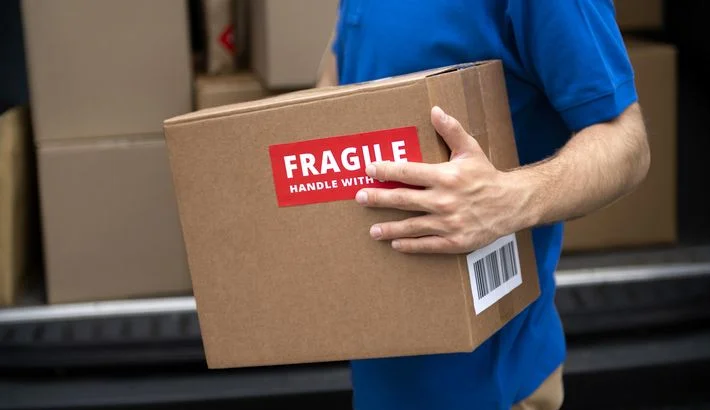
- add a “Fragile” label if the contents are fragile;
- select an appropriate shipping speed.
A fragile label on a box warns of the contents. However, it alone does not guarantee careful handling at every stage of transportation. Parcels pass through sorting centers, where they are placed on common pallets with dozens of other items. Packaging quality, not the label, is crucial here.
The major transit risks are impact damage during loading and unloading, crushing damage from other boxes on top, vibration damage during transport, and moisture damage from temperature variation or rain. Each factor acts differently: impacts damage the item locally, pressure from above deforms the entire package, vibration gradually loosens even tightly packed items, and moisture damages paper and cardboard components from the inside.
A sturdy shipping box, together with proper internal protection, reduces the likelihood of damage from each of these factors. The best way to ship fragile items is a combination of reliable packaging, sufficient cushioning, and a wise choice of shipping service, not a single trick.
Delivery speed plays a role, though not directly. The fewer times the package is transferred or reloaded, the less chance it has of being impacted or dropped during sorting. So if you have very fragile and valuable items, it is often best to pay a little more for a faster, more direct route than standard shipping.
Glass items deserve special mention. People often ask how to ship glass items safely, and this topic deserves a separate, in-depth discussion. That's because they have their own special packaging and transportation requirements.
Tracking and Insurance for Fragile Shipments
After a package has been shipped, anxiety often lingers — especially if the box contains something fragile or truly valuable. Here is where tracking comes in. Knowing a package's status lets you arrange a meeting with the recipient and spot delays early.
Meest online tracking lets you monitor your shipment status in real time, from dispatch to delivery. This is especially useful for delicate and valuable items. This allows the recipient to prepare in advance and respond more quickly if something goes wrong along the way.
Furthermore, tracking helps spot unusually long delays at one stage of the route. This is often a signal to contact customer support early rather than wait for the final delivery result. This transparency is especially useful for international shipments with multiple stops, as the package passes through several logistics hubs and customs points.
Another tool to explore in advance is shipping insurance, especially if you're shipping a high-value or one-of-a-kind item. And remember, insurance is not a substitute for good quality packaging; it just reduces the financial risk of damage or loss. Coverage depends on the type of shipment and delivery service selected, so check the details beforehand.
Many senders mistakenly believe that because their package is insured, they can pack it less carefully. In reality, the opposite is true. When reviewing a claim, insurance companies focus specifically on the quality of packaging, and careless handling of this step can result in a denial of payment.
Before purchasing insurance, it's helpful to consider several factors:
- actual value of the item being shipped;
- type and fragility of the package's contents;
- delivery route and distance;
- compensation conditions for damage;
- timeframe for filing a claim after receipt.
The combination of tracking and insurance doesn't eliminate risks completely but makes life much easier for the sender. Knowing the status of the package and having financial insurance in case of force majeure allows you to send even the most delicate items with much less stress.
Conclusion
Safe delivery of fragile items is based on a few simple principles: proper packaging, ensuring the item doesn't move inside the box, choosing a wise shipping method, and using tracking and insurance where appropriate. None of these steps replaces the others. Only together can you be sure the package arrives intact, and the recipient unpacks exactly what was sent.
By spending a little time on packaging and choosing the right shipping service, you'll save yourself unnecessary worries and unpleasant surprises after shipping. Ultimately, the more relaxed the sender feels, the less the recipient has to worry about at the other end of the journey.
To share
Our news

Meest and Self Reliance Financial Federal Credit Union (SRFFCU) Announce New Partnership
Together, we are creating more opportunities for the Ukrainian community in the United States

Important Customs Requirements Update for Shipments to Armenia
We recommend reviewing these requirements before creating your shipment to help avoid possible delays.

What Is a Bill of Lading, and Why Do You Need It?
A bill of lading is one of the central shipping records used in cargo transportation.
What Is a Packing List for Shipping and How to Prepare One?
A clear packing list makes it easier for all parties involved to understand what they are transporting.
What Is Freight Forwarding, and How Does It Work?
The exact setup depends on many factors we’ll cover.
Fulfillment Center vs. Warehouse: What’s the Difference?
The right choice depends on several factors we will discuss in more detail.

How Much Does It Cost to Ship a Car Overseas From the USA?
This process is rarely priced with one flat fee.
What Are Shipping Zones, and How Do They Affect Shipping Costs?
Let's explore this together.



 Domestic