


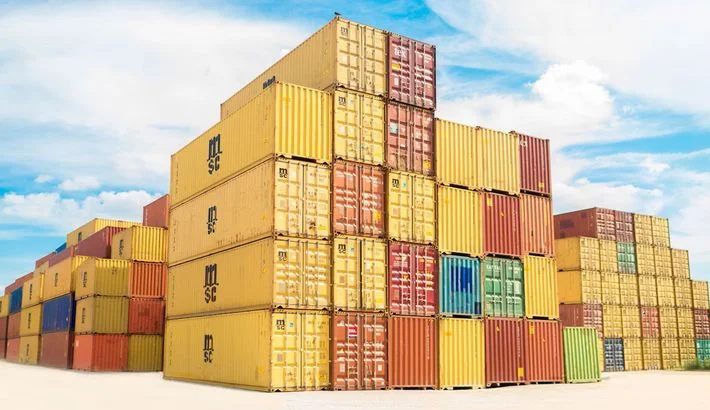
How Freight Class Affects Your Shipment and Shipping Costs


 To share
The freight class is a simple term that impacts shipping and transportation rates significantly. So, determining it correctly is a critical step. While choosing a category can look easy, it may be confusing for beginners. Such mistakes can be very expensive (literally).
To avoid paying extra, you need to know what is freight class and all the ins and outs of its calculations. For this reason, we have created this comprehensive guide that explains LTL shipping and how to determine freight class in detail and with clear examples.
What Is Freight Class in LTL Shipping?
Freight class is a standardized classification assigned to commodities shipped through less-than-truckload (LTL) transportation. It is determined under the National Motor Freight Classification (NMFC) system and ranges from Class 50 to Class 500. This classification considers four main factors:
- density
- stowability;
- handling;
- liability.
Density is often seen as the most important factor, and it is so for many categories of goods. The principle is fairly simple: the heavier and more compact shipments are, the easier it is to load and transport them. But bulky or fragile items need extra attention to cargo loading and take up more space. Consequently, it is more expensive to transport.
According to the National Motor Freight Traffic Association (the establisher of this classification), dense, durable, and easy-to-handle freight is on the lower side of the scale. Higher classes cover lighter, bulkier, or more fragile items.
However, the class is only one value that matters for LTL shipping. Each product is given an NMFC item number, which is a unique identifier for the product being shipped. For an NMFC item, the freight class may be static or calculated based on density as well as other classification requirements.
What Factors Determine Freight Class?
There are only four factors that help senders and shipping companies determine the class. One of them plays a leading role, while others are supportive. This classification helps to balance efficiency, safety, and fairness in pricing. These are all things that carriers look at, so it’s important to know what they are and how they affect your shipping rates.
Freight Density
Density is the most impactful aspect. Shipments that are compact and heavy compared to their size are on the lower side. Lower freight classes generally correspond to lower base shipping rates, although the final cost also depends on other shipment details.
On the other hand, lightweight or bulky goods occupy more space. They are on the higher side of the scale and feature higher rates. However, density alone does not always determine freight class, as certain commodities have additional classification requirements related to stowability, handling, and liability.
Stowability, Handling, and Liability
While density is the leading factor, there are also other requirements that are taken into consideration. Thus, depending on the commodities, the class can be different even if the density calculations presuppose the opposite. Here are the three factors that matter:
- Stowability refers to how easily freight forwarding can be arranged and transported alongside other shipments. Items that are irregularly shaped, hazardous, or non-stackable are often more challenging in transportation. These characteristics may affect freight classification depending on the applicable NMFC item, even when shipments have similar densities.
- Handling requirements, because certain items require special equipment or special training to handle them carefully.
- Liability, as there are shipments with an increased risk of theft, damage, or spoilage.
What are the commodities for which these three factors actually matter? Certain commodities, including some hazardous, fragile, or temperature-sensitive goods, may have additional classification requirements. Their freight class must be determined using the applicable NMFC item rather than density alone.
How to Determine the Freight Class of Your Shipment
Determining the LTL freight class is a crucial step. It should be done before you hand over your goods to the shipping company. Moreover, it is necessary to double-check the calculations and verify everything with official sources. Why? Misclassification causes delays, reweighs, reclassifications, billing disputes and other issues that are strongly unwanted by senders.
The best way to avoid such inconveniences is to know how to calculate freight class and how the National Motor Freight Classification (NMFC) chart applies to different commodities.
How to Calculate Freight Density
As freight density is often a decisive factor, you need to know how to calculate it. It determines the amount of weight in a certain volume. It is calculated easily with a simple formula:
Density = Weight (lb) / Volume (ft³)
How do we use this formula in practice? Here is a quick example: you have a pallet with industrial machine parts that should be delivered to the regional distribution hub. You use a standard wooden pallet, 48” x 40”. Why does the pallet and its size matter? Its weight is taken into consideration, along with the packaging material. So, the weight of this loaded pallet is 1,200 lbs. Its dimensions are:
- 48 inches long;
- 40 inches wide;
- 60 inches tall.
So, the total volume is 115,200 cubic inches (or 66.7 cubic feet). To calculate density, you need to: 1,200÷66.7≈18 lbs/ft³. Under the 2025 NMFC density scale, this corresponds to Class 70, provided the commodity is classified using this density-based scale.
If the same pallet were filled with lightweight foam insulation instead of machine parts, the weight might drop to only 200 pounds while the volume remained the same. That would yield a density of just 3 lbs/ft³. Under the same density-based scale, this would correspond to Class 250.
How to Use a Freight Class Chart and NMFC Codes
We have categorized the goods mentioned in the examples above with the help of a freight class chart. It provides a standardized way to assign freight class based on density. In 2025, the NMFTA introduced the changes to this chart. Currently, there is a 13-tier density scale.
| Density (lbs/ft³) | Freight Class |
|---|---|
| <1 | 400 |
| 1–2 | 300 |
| 2–4 | 250 |
| 4–6 | 175 |
| 6–8 | 125 |
| 8–10 | 100 |
| 10–12 | 92.5 |
| 12–15 | 85 |
| 15–22.5 | 70 |
| 22.5–30 | 65 |
| 30–35 | 60 |
| 35–50 | 55 |
| 50+ | 50 |
Note that this chart applies only to density-based commodities. Some commodities may have specific NMFC classifications or additional requirements related to handling, stowability, or liability. Their freight class must be determined using the applicable NMFC item rather than density alone. Their class is defined by the freight class codes (NMFC item number).
We recommend always checking the NMFC item number through official resources or with the carrier itself. If you use only the density chart and do not verify the code, you risk misclassifying your shipment.
How Does Freight Class Affect LTL Shipping Costs?
As we have already mentioned, the class impacts the LTL shipping rates directly. It indicates how difficult it is to ship your cargo based on how dense it is or how careful handling it requires in the transportation process. The influence of misclassification may seem to be small, but it can be truly significant.
Carriers use this classification and charts to determine the shipping cost. So, the difference in classes is one of the main reasons why cargo with the same weight or with the same dimensions may cost differently.
Incorrect classification can quickly become expensive. Carriers routinely verify shipments by reweighing and remeasuring them. If the declared information does not match the actual density or commodity requirements, the carrier will issue a reclassification.
Besides reclassification, senders can face:
- delays with delivery, as shipments that need correction often get stuck in terminals until the accurate information is confirmed;
- administrative fees, since some carriers may charge paperwork or inspection fees for correcting the Bill of Lading (BOL);
- compliance risks, as incorrect classification may trigger audits or penalties if safety standards are not met.
If false information is submitted on a regular basis, it may cause future shipments to be examined more closely. If so, favorable rate agreements may be limited or eliminated as a consequence.
How to Avoid Freight Classification Errors and Extra Costs
The first step is extremely simple and straightforward. Make sure you measure the size and weight of your shipment accurately. To do this, weigh your goods for transport only when they are packed, secured and stacked on a pallet. Any crates or protective materials used must also be included in the final weight. Any differences (even slight ones) can cause misclassification and the problems described above.
Packaging is also important. Proper packaging helps protect freight during transportation and may improve its handling and stowability. However, it does not automatically result in a lower freight class. Freight that’s hard to stack or poorly packaged may be assigned to a higher class. Consequently, the shipping cost increases.
Verification of NMFC codes is the next step you need to take. Some commodities have specific NMFC classification requirements that may involve factors beyond density. Always be sure to check the NMFC item number through the official NMFC resources or carrier-provided tools.
Finally, do not hesitate to confirm classification details with carriers or third-party logistics providers before finalizing a Bill of Lading (BOL). It takes only a couple of minutes, but it helps prevent disputes and ensures that the shipment is billed correctly. As a result, you spend slightly more time on the preparation of your cargo for shipping, but you eliminate the risk of overpaying and complications in the shipping process if classification mistakes are made.
Conclusion
Most LTL shipments are priced by freight class. It helps carriers make the most efficient use of space and resources and, as a result, helps set the price of shipping. Senders need to get density right, verify NMFC codes and package freight efficiently to avoid overpaying.
And those who misclassify their cargo can also incur reclassification fees, billing adjustments, and potential loss of perks provided by the shipping company. So, never ignore this part of the freight preparation for shipping. It is better to double-check everything, then correct afterwards. Always contact your shipping carrier if you have doubts or questions regarding this aspect.
To share
Our news

Ukrainian Angel Tree 2026: Become Santa for a Day
Join us in making Christmas wishes come true with the Voices of Children Foundation and Meest!
What Does an Estimated Delivery Date Really Tell You?
We would like to focus on the most vague one — the estimated delivery date.

How WISMO Affects E-Commerce and What Businesses Can Do About It
Let's explore this together.
Why Accessorial Charges Can Increase Your Freight Shipping Costs
Preparation and transparency are the best ways to manage accessorial charges.


How to Ship Golf Clubs Without Damage or Extra Costs
Learn how much shipping may cost and how to transport your clubs over long distances.
When Do You Need a Certificate of Origin for International Shipping?
This is necessary in several cases that we have discussed in the article.



 Domestic