


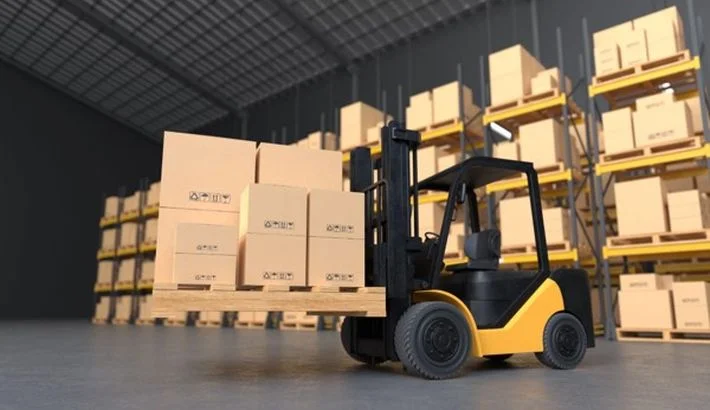
Fulfillment Center vs. Warehouse: What’s the Difference?


 To share
Companies that store and ship products often use the terms “warehouse” and “fulfillment center” as if there were no difference between them. While they are related, their roles are not the same. What’s the most suitable option? The right choice depends on several factors we will discuss in more detail below.
Businesses with sustainable storage needs can utilize warehousing solutions to gain the space and control necessary to keep their products organized. For companies with a lot of customer orders, the setup of the operations may be different — they require one that is structured around picking, packing, shipping, and returns processing.
What Is a Warehouse?
A warehouse is, first and foremost, a facility for storing goods prior to their sale, transfer, distribution, or use. Its main role is inventory storage — often for longer periods than items remain in an order-processing environment. A warehouse may hold pallets, cardboard boxes, raw materials, finished products, seasonal stock, or reserve supplies. Items usually move in larger quantities — and the day-to-day activity is not always centered around individual consumer orders.
The facility can also handle goods receipt, storage, pallet processing, inventory management, cross-docking, and stock counts. The range of services varies by operator. But the main purpose is the same: to keep items safe, organized, and available for business to use.
A company takes advantage of a warehouse when it produces or buys more products than it can sell at one time. Subsequently, the stored inventory can be shipped to retail outlets, distributors, production sites, or other logistics locations.
Warehousing services can help importers, wholesalers, manufacturers, and brands that build seasonal reserves to manage space more easily. This allows businesses to securely hold inventory without the expense and responsibility of operating their own facility.
What Is a Fulfillment Center?
A fulfillment center is not just a warehouse — it is driven by the flow of customer orders. Goods are received and stored in the facility. But its primary purpose is to rapidly process purchases and ship products to meet demand.
A typical suite of fulfillment services may include item receiving, inventory management, order picking, packaging, labeling, dispatch, and returns processing. In many cases, software links incoming purchases with warehouse staff and shipping workflows. That makes order fulfillment the center of daily activity. Products may remain on shelves for days or weeks, but the facility is organized for frequent movement rather than passive long-term holding.
Each customer purchase creates a separate task. The system must know where an item is located, match it to the correct order, prepare it for shipment, and update stock records after the parcel leaves. Technology therefore plays a larger role in keeping high-volume workflows synchronized.
A fulfillment warehouse is a combination of storage and active execution. This is particularly relevant for online sellers who need pick and pack services, regular parcel shipping, and streamlined order processing without having to handle these tasks in-house.
Fulfillment Center vs. Warehouse: Key Differences
The distinction becomes clearer when you compare what happens after goods arrive. Instead of repeating the basic definitions, it is more useful to look at the operational differences that affect cost, speed, and day-to-day workflow:
- Purpose and storage duration — a warehouse emphasizes holding stock, often for medium- or long-term periods. A fulfillment center is structured to keep goods moving as orders are received.
- Product movement — warehouse stock may move on pallets or bulk loads. Fulfillment inventory is typically picked in units or small quantities.
- Order processing and shipping frequency — order-driven operations involve ongoing processing and frequent outbound shipments. Traditional storage facilities may ship less often and in larger loads.
- Pricing model — warehousing is typically priced around occupied space, pallet positions, handling, and holding period. Fulfillment may also include receiving, picking, packing, materials, returns, and per-order fees.
- Services and technology — fulfillment uses integrations, scanning, order-routing software, and inventory management tools. A basic warehouse may need fewer transactional systems.
- Common shipment types — warehouses generally support wholesale, replenishment, commercial cargo, or reserve stock. Fulfillment centers are often associated with parcels, direct-to-consumer orders, and e-commerce fulfillment.
These differences explain why a fulfillment center vs warehouse comparison should focus on workflow rather than building type. Two facilities can look similar physically while operating under very different service models.
The right choice depends on what happens after inventory arrives. Are products waiting for shipment in large batches? Storage may be enough. When each sale triggers picking, packing, and shipment, fulfillment becomes more important.
What Does Warehouse Fulfillment Mean?
The terms can overlap because many logistics providers combine storage and fulfillment in one operation. Warehouse fulfillment describes a setup in which products are kept in a facility and then processed for outbound orders from the same location.
A warehouse fulfillment center goes beyond basic storage by supporting the workflows needed to turn stored inventory into customer shipments. Depending on the operation, that may include receiving, stock control, picking, packing, labeling, dispatch, returns, and reporting.
If you’re asking, “What is fulfillment warehouse?” the term usually refers to a facility that provides both space for goods and the operational capability to prepare and send orders.
This model can reduce the need for transfers between different facilities. Instead of keeping inventory in one building and moving it elsewhere for packing, an enterprise can use combined warehousing solutions and fulfillment functions within one logistics setup.
That overlap is also why terminology varies among providers. One company may say fulfillment center. Another may use a fulfillment warehouse. A third may describe the same combined activity as warehouse fulfillment.
When Do You Need Warehousing, and When Do You Need Fulfillment?
The decision starts with how your inventory moves and how much operational support the business needs. Prior to choosing a model, review the factors that shape daily logistics and future growth:
- storage duration — consider how long products usually remain in stock before they are transferred or sold;
- order frequency — regular individual purchases point toward an order-driven model, while occasional bulk movement may favor warehousing;
- service needs — decide whether you need storage only or also picking, packing, labeling, returns, and dispatch coordination;
- shipment size — pallets, cases, and commercial loads usually follow a different workflow from small parcels sent to individual customers;
- technology requirements — integrations, real-time stock updates, and automated order routing become more important as transaction volume increases.
Looking at these factors together makes the choice clearer than relying on facility labels alone. The same company may even need a different model as sales channels, order volume, or inventory strategy changes.
When Warehousing Is the Better Fit
Warehousing is usually the stronger option when products demand a secure place to stay but do not require constant individual-order activity. This can apply to importers, wholesalers, manufacturers, distributors, and businesses building stock before a seasonal sales period.
It may also be appropriate when goods move mainly by pallet, case, or commercial load rather than by individual parcel. In this situation, paying for full order-level processing may add functions the business rarely uses.
Longer holding periods are another sign that a warehouse may fit better. If the main priorities are capacity, stock visibility, and controlled access rather than rapid parcel dispatch, a storage-focused model is often simpler.
When Fulfillment Is the Better Fit
This system is useful when orders are frequent — and customers expect fast and accurate shipping. Online stores, marketplace sellers, subscription businesses, and direct-to-consumer brands often require more than just shelf space.
Fulfillment services reduce the amount of operational work the seller has to do internally. The provider can coordinate picking and packing, label preparation, handoff to carriers, returns, and related stock updates as part of a structured procedure.
The setup also scales well with changes in purchase volume. A seller can use an established order-processing workflow instead of hiring warehouse staff, adding packing stations, and building software connections independently.
Can Warehousing and Fulfillment Be Combined?
Yes. A business does not necessarily have to choose just one model — storage and fulfillment often cover different stages of the same inventory cycle. Goods can arrive in bulk, remain stored until needed, and then move gradually into outbound orders. A combined solution may therefore begin with stock holding and shift to active fulfillment as sales occur.
Hybrid models also allow you to separate reserve products from available inventory. Extra units are stored, and only a small amount is put up for picking each day. That means more goods can be pushed into the fulfillment workflow as demand changes — without having to be moved to another provider or facility.
This arrangement works well when a company wants reserve stock and order execution in the same logistics network. It can reduce transfers, simplify product visibility, and create a smoother path from inbound inventory to the final customer.
The important point is to define what is included. Storage capacity, receiving, pick and pack services, returns, reporting, integrations, and shipping coordination should all be clear before selecting a provider.
Conclusion
Both warehouses and fulfillment centers keep inventory — but they are built with different operational priorities in mind. Warehousing is about space, control, and longer-term holding. Fulfillment transforms stock into individual customer orders.
A business with large inventories and low shipment rates may require primarily storage space. A company processing frequent consumer purchases is more likely to benefit from fulfillment — especially when speed, parcel preparation, and system integration matter.
Both models can work together: by combining stock holding with active sales handling, businesses can keep inventory in one logistics network and gradually release products as demand develops.
Look at storage duration, order volume, shipment type, technology needs, pricing structure, and service scope — then choose a solution. Such a comparison will facilitate the selection of the model that supports current operations but doesn’t limit future growth.
To share
Our news
Meest and Self Reliance Financial Federal Credit Union (SRFFCU) Announce New Partnership
Together, we are creating more opportunities for the Ukrainian community in the United States
Important Customs Requirements Update for Shipments to Armenia
We recommend reviewing these requirements before creating your shipment to help avoid possible delays.

What Is a Bill of Lading, and Why Do You Need It?
A bill of lading is one of the central shipping records used in cargo transportation.

What Is a Packing List for Shipping and How to Prepare One?
A clear packing list makes it easier for all parties involved to understand what they are transporting.
What Is Freight Forwarding, and How Does It Work?
The exact setup depends on many factors we’ll cover.
How Much Does It Cost to Ship a Car Overseas From the USA?
This process is rarely priced with one flat fee.

What Are Shipping Zones, and How Do They Affect Shipping Costs?
Let's explore this together.

What Does “Returned to Sender” Mean, and What Should You Do Next?
There’s typically a way to resolve the problem.



 Domestic